Private Label vs White Label: Which Is Right for Your Clothing Brand?
Understand the difference between private label and white label clothing manufacturing. Learn which model fits your brand's needs, budget, and growth stage.
 Pedro Carreira··3 min read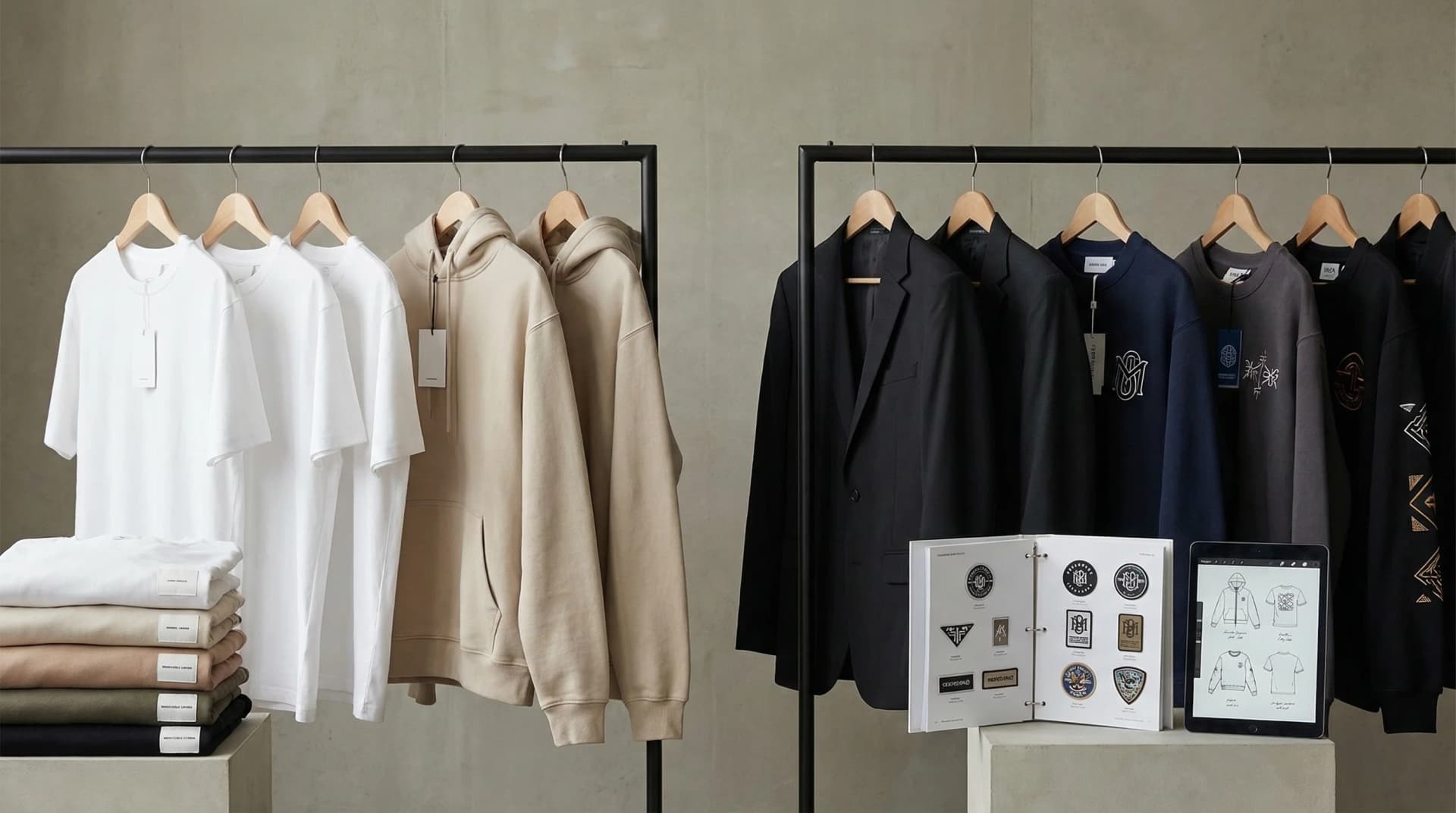
The Difference
When launching or scaling a clothing brand, one of the first manufacturing decisions you will face is whether to go private label or white label. Both have their place, but they serve different needs.
White label means a manufacturer produces a standard product — say, a 380gsm hoodie — and you add your own branding: labels, tags, packaging, and sometimes custom colours. The garment design and construction are pre-set.
Private label means you bring your own design — a tech pack with specifications, measurements, fabric choices, and construction details — and the manufacturer produces it exclusively for your brand. The garment is unique to you.
When White Label Makes Sense
White label is ideal when you are:
- —Starting a new brand and want to test the market before investing in custom development
- —Working with a limited budget — no sampling costs, no pattern development fees
- —Focused on branding rather than product design — your differentiation comes from marketing, community, and brand story rather than unique garment construction
- —Need fast turnaround — white label products can ship much faster since there is no development phase
The trade-off is that other brands may sell a similar base product. Your differentiator becomes your brand, not the garment itself.
Ready to manufacture your collection?
Factory-direct from Barcelos, Portugal. MOQ 50 units per style, colour and size.
Request a QuoteNo commitment · No obligation
When Private Label Is Worth It
Private label makes sense when you are:
- —Building a premium or luxury brand where unique construction and fit are core to your identity
- —Scaling beyond basics — you need specific design details, custom fabrics, or unique construction methods
- —Competing on product quality — your customers buy from you because of how the garment fits, feels, and is made
- —Ready to invest in development — sampling typically takes 2–6 weeks and involves prototyping costs
The upside is a truly unique product that no competitor can replicate.
The Practical Middle Ground
Many brands start with white label to build revenue and brand awareness, then transition to private label as they grow. This is a smart approach:
- 1.Launch with white label basics in your brand packaging
- 2.Learn what your customers want
- 3.Develop private label pieces based on real customer feedback
- 4.Gradually replace white label products with custom designs
How We Work
At White Cotton, we support both models as a clothing manufacturer in Portugal. Our white label catalogue includes hoodies, sweatshirts, t-shirts, and more in premium fabrics that are ready to brand. For private label, we work from your tech packs to develop custom garments from scratch.
Our minimum order quantity is 50 units per style per colour for both white label and private label. Sampling for private label typically takes 2–6 weeks. Read our full guide to starting a clothing brand or browse our products.

Pedro Carreira
Founder of White Cotton, a textile manufacturer in Barcelos, Portugal. Producing custom clothing collections for brands across 15+ countries.
Continue Reading
How Much Does It Cost to Start a Clothing Brand in 2026? Real Numbers
![Hoodie Manufacturing Costs: Real Prices from a Portuguese Factory [2026]](/_next/image?url=%2Fimages%2Fgenerated%2Fblog%2Fhoodie-manufacturing-costs-breakdown.webp&w=1920&q=75)
Hoodie Manufacturing Costs: Real Prices from a Portuguese Factory [2026]
![How to Find a Clothing Manufacturer in Portugal: A Factory Owner's Honest Guide [2026]](/_next/image?url=%2Fimages%2Fgenerated%2Fblog%2Fhow-to-find-clothing-manufacturer-portugal.webp&w=1920&q=75)
How to Find a Clothing Manufacturer in Portugal: A Factory Owner's Honest Guide [2026]
![How to Vet a Clothing Manufacturer: The Due Diligence Checklist [2026]](/_next/image?url=%2Fimages%2Fgenerated%2Fblog%2Fhow-to-vet-clothing-manufacturer.webp&w=1920&q=75)
How to Vet a Clothing Manufacturer: The Due Diligence Checklist [2026]
![27 Questions to Ask a Clothing Manufacturer Before Placing Your Order [2026]](/_next/image?url=%2Fimages%2Fgenerated%2Fblog%2Fquestions-to-ask-clothing-manufacturer.webp&w=1920&q=75)
27 Questions to Ask a Clothing Manufacturer Before Placing Your Order [2026]
Start your collection today
Factory-direct from Barcelos, Portugal. MOQ 50 units. Get a free quote.
Request a Quote← Previous
Clothing Manufacturing Costs Per Unit — Real Factory Prices
Next →
Best Countries to Manufacture Clothing — 6 Compared (2026)
Ready to start manufacturing?
MOQ 50 pieces · Free quote · Factory-direct from Portugal