How to Start a Clothing Brand in 2026 (Step-by-Step)
A factory owner who launches 2-3 brands monthly shares the real process: tech packs, sampling at €50–€150, MOQs from 50 units, total budget €3K–€8K.
 Pedro Carreira··7 min read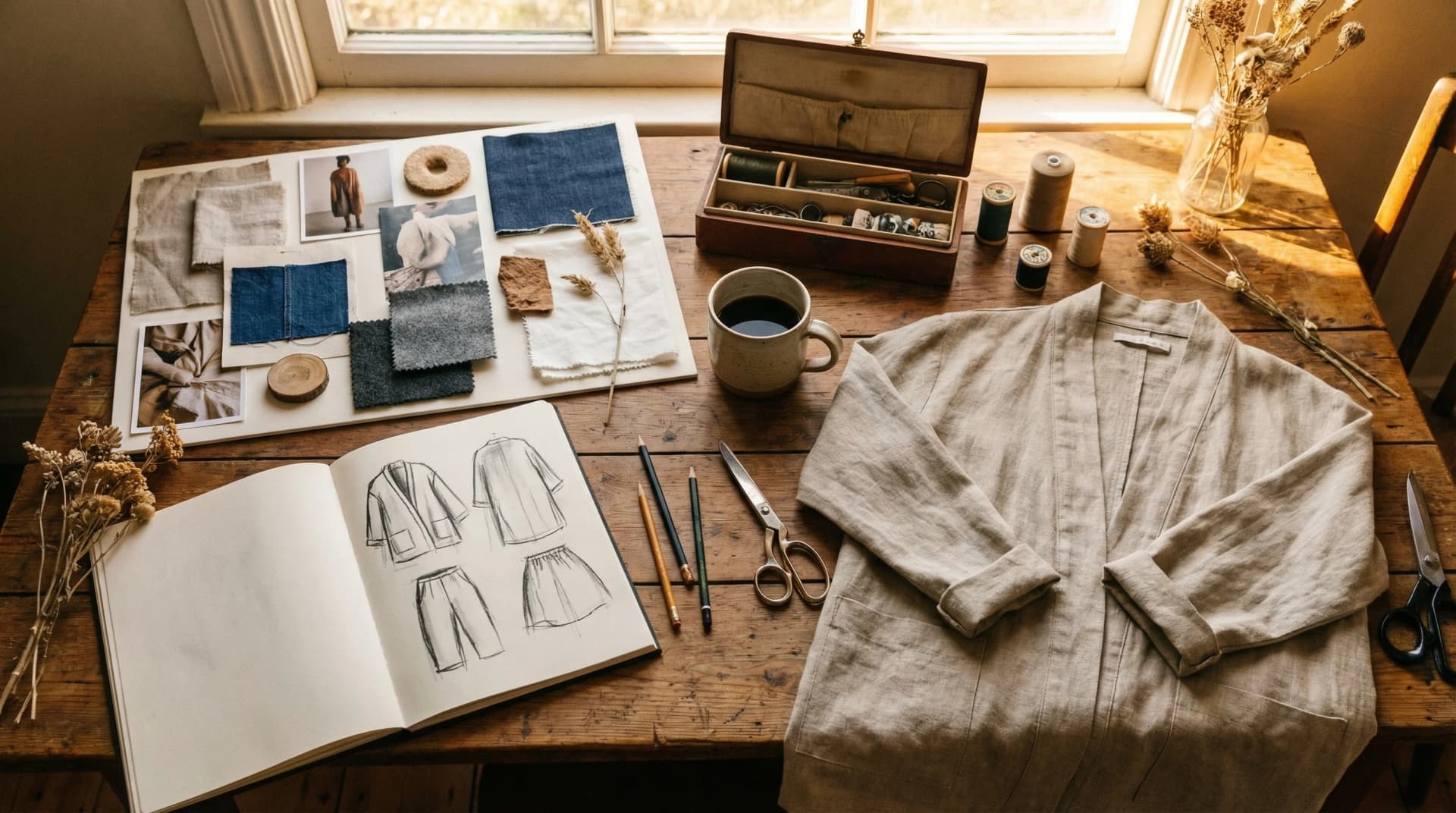
Before You Start
Every day we receive enquiries from people launching clothing brands. Some have detailed tech packs and market research. Others have a sketch on a napkin and a dream. Both are valid starting points — but the path from idea to finished product is the same.
This guide is the advice we give every new brand that contacts us. It is based on decades of working with brands at every stage, from first-time founders to established labels.
Step 1: Define Your Niche
The biggest mistake new brands make is trying to be everything. "We make clothes for everyone" is not a brand — it is a department store.
Before you think about production, answer these questions:
- —Who is your customer? Age, income, lifestyle, values. Be specific.
- —What problem do you solve? Better quality basics? Sustainable streetwear? Size-inclusive workwear?
- —What makes you different? If the answer is "better quality" or "unique designs", dig deeper. Everyone says that.
- —What is your price point? This determines your manufacturing options, margins, and target market.
Step 2: Design Your First Collection
Start small. We cannot stress this enough.
Your first collection should be 2–5 styles. Not 20. Here is why:
- —Each style requires sampling (€50–200 per sample)
- —Each style has a minimum order quantity
- —Each style needs to work in multiple sizes and colours
- —More styles = more inventory risk
Focus on your hero product. What is the one item that defines your brand? Make that perfect first. You can expand later.
Design tools
- —Adobe Illustrator: Industry standard for tech packs and flat sketches
- —Canva: Adequate for mood boards and initial concepts
- —Reference garments: Buy existing products that are close to what you want and annotate what you would change
Step 3: Create a Tech Pack
A tech pack is the blueprint your manufacturer uses to produce your garment. At minimum, it should include:
- —Flat sketches (front, back, side)
- —Measurements for all sizes
- —Fabric specifications (type, weight, composition)
- —Colour references (Pantone codes)
- —Trim details (labels, zippers, buttons)
- —Print or embroidery placement
- —Construction notes (seam types, finishing)
If you do not have a tech pack, many manufacturers — including us — can help you develop one based on reference garments and descriptions. But the more detail you provide, the faster and cheaper the process. Read our full guide on how to create a tech pack for step-by-step instructions.
Step 4: Find a Manufacturer
This is where most brands struggle. Here is how to approach it:
Where to look
- —Direct outreach: Research factories in your target region and contact them directly
- —Trade shows: Première Vision (Paris), Texworld (Paris), Munich Fabric Start
- —Online directories: Maker's Row, Sewport, Kompass
- —Blank manufacturers: If not ready for full custom, blank clothing manufacturers in Europe let you start without a tech pack
- —Word of mouth: Other brand founders are often willing to share factory contacts
What to ask
- —What is your MOQ per style per colour?
- —What is your typical lead time?
- —- What certifications do you hold?
- —Unsure which country to manufacture in? Portugal vs China vs Turkey — full comparison?
- —Can you send references or examples of your work?
- —What is your sampling process and cost?
- —Do you work with my fabric type?
Red flags
- —No willingness to share client references
- —Unusually low pricing (often means corners are being cut)
- —Unclear communication about timelines and costs
- —No certifications whatsoever
- —Demands full payment upfront before sampling
Step 5: Sampling
Never go to production without sampling. The sampling process typically goes:
Ready to manufacture your collection?
Factory-direct from Barcelos, Portugal. MOQ 50 units per style, colour and size.
Request a QuoteNo commitment · No obligation
First sample (proto sample)
- —Your manufacturer creates the first version based on your tech pack
- —Expect issues — fit, fabric drape, colour matching
- —Cost: €50–200 per sample
- —Timeline: 1–3 weeks
Second sample (fit sample)
- —After your feedback, a revised version is made
- —Focus on fit and construction details
- —Most brands go through 2–3 sample rounds
Pre-production sample (PP sample)
- —Final version using production fabric and trims
- —This is what your bulk production will look like
- —Approve this sample in writing before production begins
Budget for 2–3 sample rounds per style. First-sample perfection is rare.
Step 6: Production
Once you approve the PP sample, production begins:
Fabric sourcing
Before committing to production, it is worth understanding your clothing production timeline and having a clothing brand business plan in place.
- —If the factory sources fabric for you, they will confirm lead time
- —Some fabrics are stock (available immediately), others are made to order (4–8 weeks). Learn more about fabric sourcing for clothing brands
Production timeline
- —Cutting: 1–3 days
- —Sewing: 1–3 weeks depending on complexity and quantity
- —Finishing (washing, pressing, quality control): 2–5 days
- —Packing: 1–2 days
Payment terms
- —Common structure: 30% deposit on order confirmation, 70% on completion before shipping
- —Some factories offer 50/50
- —First orders are almost always deposit-based; repeat customers may get net-30 or net-60 terms
Quality control
- —In-line inspection during production
- —Final inspection before packing
- —Ask your factory about their QC process
- —For large orders or first orders, consider hiring a third-party QC inspector. Read our full garment quality control guide for what to check and how.
Step 7: Getting to Market
With finished product in hand:
E-commerce
- —Shopify is the standard for fashion brands
- —Professional product photography is non-negotiable
- —Size guides based on your actual measurements (not generic charts)
Pricing
A common formula:
- —Wholesale price = production cost × 2.5–3
- —Retail price = wholesale price × 2–2.5
- —Example: €15 production cost → €40 wholesale → €90 retail
Fulfilment
- —Start with self-fulfilment to understand your orders
- —Scale to a 3PL when volume justifies it
- —Budget for packaging that matches your brand
Common Mistakes to Avoid
Over-ordering on the first run. Start at your MOQ. If it sells out, reorder. Dead stock is the number one killer of new brands.
Skipping the business fundamentals. Register your business, understand VAT/import duties, set up proper accounting from day one.
Underpricing. New brands often price based on what they would pay, not what the product is worth. If your production cost is €15 and you sell at €30, you have no margin for marketing, returns, discounts, or unexpected costs.
Copying instead of creating. Taking inspiration is normal. Copying another brand's exact design is a legal and ethical liability.
Neglecting branding. Your labels, packaging, hang tags, and unboxing experience matter as much as the garment itself at the premium end.
Timeline and Budget
For a first production of 2–3 styles at 50 units each:
- —Design and tech pack development: 2–4 weeks
- —Sampling (2–3 rounds): 4–8 weeks
- —Production: 4–8 weeks
- —Total: 3–5 months from first contact to finished product
Budget estimate:
- —Sampling: €300–800
- —Production (150 units across 3 styles): €2,000–5,000
- —Labels, packaging, hang tags: €200–500
- —Total: €2,500–6,300
These are estimates for European manufacturing. Asian production would be cheaper per unit but higher overall due to shipping and higher MOQs. Read our country-by-country comparison and production costs breakdown for more detail.
Ready to Start?
At White Cotton, we work with brands at every stage. Whether you have a detailed tech pack or just an idea, we can help you get from concept to finished product. Our MOQ starts at 50 units per style per colour, and we guide you through every step of the process. See how to start working with us or browse our product catalogue.

Pedro Carreira
Founder of White Cotton, a textile manufacturer in Barcelos, Portugal. Producing custom clothing collections for brands across 15+ countries.
Continue Reading
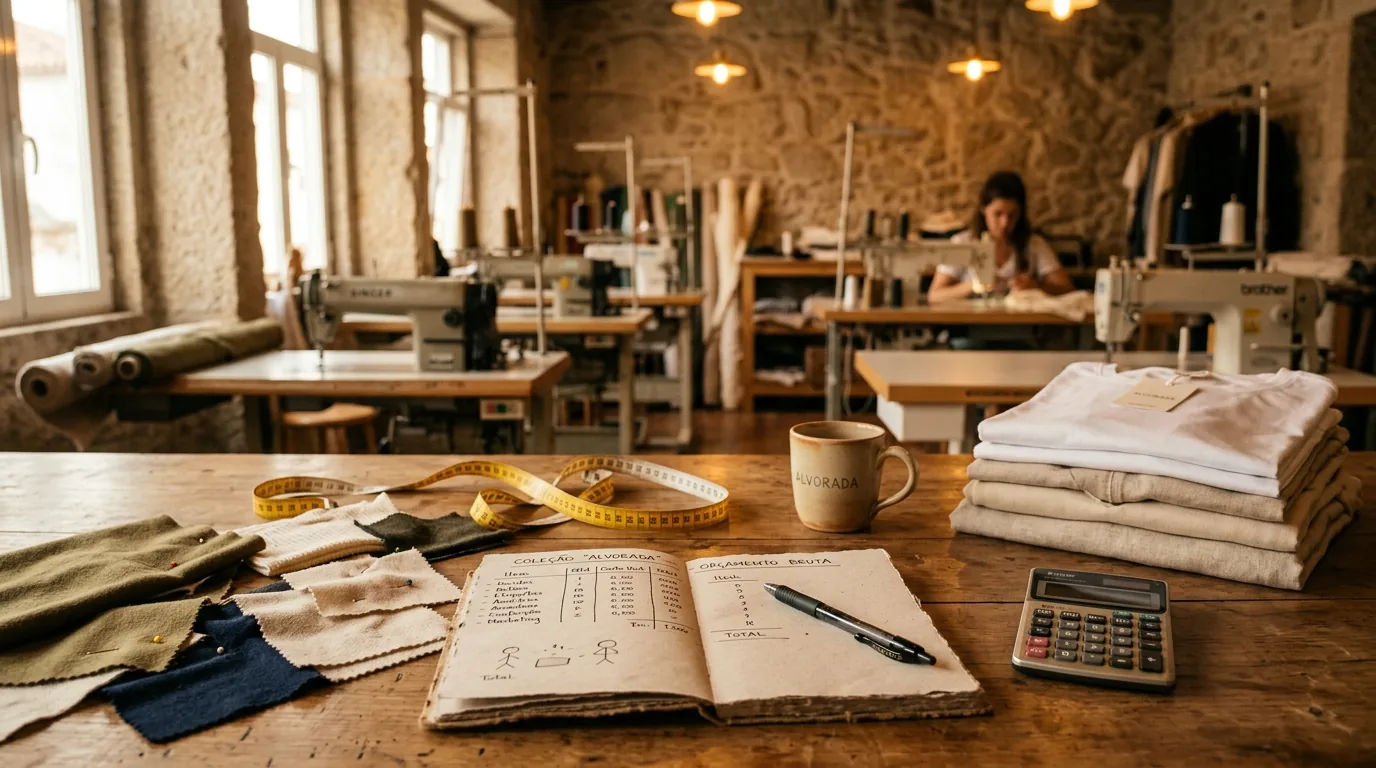
How Much Does It Cost to Start a Clothing Brand in 2026? Real Numbers
![Hoodie Manufacturing Costs: Real Prices from a Portuguese Factory [2026]](/_next/image?url=%2Fimages%2Fgenerated%2Fblog%2Fhoodie-manufacturing-costs-breakdown.webp&w=1920&q=75)
Hoodie Manufacturing Costs: Real Prices from a Portuguese Factory [2026]
![How to Find a Clothing Manufacturer in Portugal: A Factory Owner's Honest Guide [2026]](/_next/image?url=%2Fimages%2Fgenerated%2Fblog%2Fhow-to-find-clothing-manufacturer-portugal.webp&w=1920&q=75)
How to Find a Clothing Manufacturer in Portugal: A Factory Owner's Honest Guide [2026]
![How to Vet a Clothing Manufacturer: The Due Diligence Checklist [2026]](/_next/image?url=%2Fimages%2Fgenerated%2Fblog%2Fhow-to-vet-clothing-manufacturer.webp&w=1920&q=75)
How to Vet a Clothing Manufacturer: The Due Diligence Checklist [2026]
![27 Questions to Ask a Clothing Manufacturer Before Placing Your Order [2026]](/_next/image?url=%2Fimages%2Fgenerated%2Fblog%2Fquestions-to-ask-clothing-manufacturer.webp&w=1920&q=75)
27 Questions to Ask a Clothing Manufacturer Before Placing Your Order [2026]
Start your collection today
Factory-direct from Barcelos, Portugal. MOQ 50 units. Get a free quote.
Request a Quote← Previous
Understanding Fabric Weights: A Complete Guide for Fashion Brands
Next →
Hoodie Manufacturing Guide: Fabric, GSM, Costs & Construction [2026]
Ready to start manufacturing?
MOQ 50 pieces · Free quote · Factory-direct from Portugal