Quality Control in Garment Manufacturing: What Brands Need to Know
How quality control works in clothing production. AQL standards, inspection stages, common defects, and how to ensure your manufacturer delivers consistent quality.
 Pedro Carreira··6 min read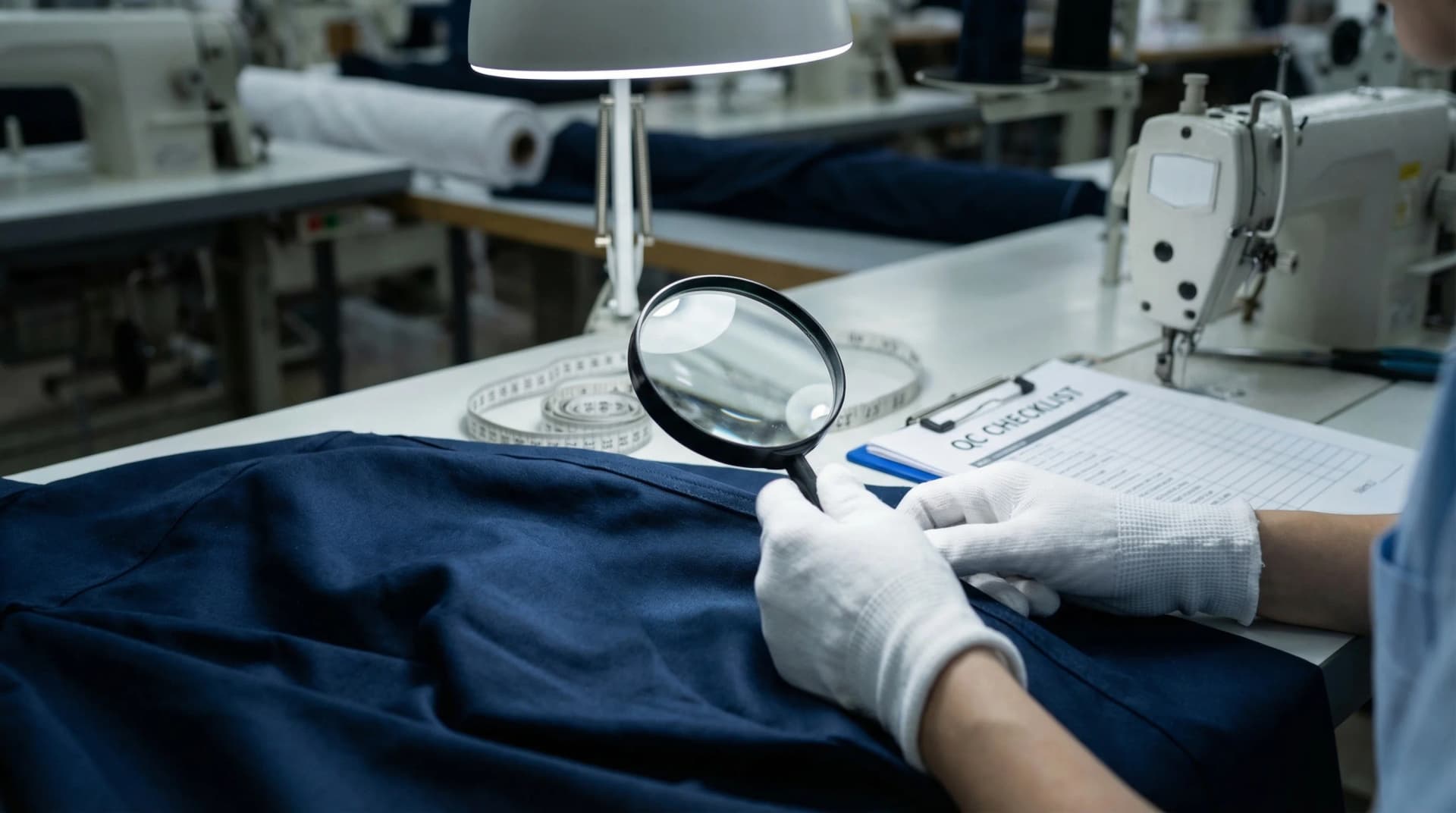
Why Quality Control Matters
A single batch of defective products can destroy a new brand. Returns eat your margin. Bad reviews kill your reputation. And replacing defective stock takes months you probably cannot afford.
Quality control is not just the manufacturer's responsibility — it is a shared process between you and your factory. Understanding how QC works helps you set expectations, catch issues early, and protect your brand.
The Four Stages of Quality Control
Stage 1: Incoming Material Inspection
Before production begins, raw materials are checked:
- —Fabric: Weight (GSM), colour accuracy against Pantone reference, width, hand feel, defects (holes, stains, inconsistent dyeing)
- —Trims: Correct colour, size, function (zippers open smoothly, buttons are secure)
- —Labels: Correct content, spelling, legal compliance (care symbols, composition)
A good factory will reject substandard materials before they enter the production line. This prevents problems from compounding downstream.
Stage 2: In-Line Inspection
During production, quality is monitored continuously:
- —First-piece check: Before the sewing line runs, the first completed garment is inspected against the approved sample. Measurements, construction, and appearance are verified. Only after approval does full production begin.
- —Roaming inspection: QC staff move through the production line checking work at each station — seam alignment, stitch tension, thread trimming, pattern matching.
- —Measurement checks: Random garments are pulled from the line and measured against the size chart. Tolerances are typically ±1cm for body measurements and ±0.5cm for smaller details.
Stage 3: End-of-Line Inspection
After each garment is completed:
- —Visual inspection for external defects (loose threads, stains, misalignment)
- —Functional check (zippers, buttons, drawcords work correctly)
- —Measurement spot-check
- —Pressing and finishing quality
- —Label placement and content
Stage 4: Final (Pre-Shipment) Inspection
Before packing and shipping, a statistical sample is pulled from the finished batch:
- —Full measurement check on the sample
- —Visual inspection under standard lighting
- —Packaging verification (correct folding, labels, tags, poly bags)
- —Quantity verification against the order
This is where the AQL standard comes in.
Understanding AQL
AQL (Acceptable Quality Level) is the international standard for statistical sampling in quality inspection. It defines how many units to inspect from a batch and how many defects are acceptable.
AQL Levels
- —AQL 1.0: Very strict. Used for luxury brands. At 100 units, you inspect 20 and accept a maximum of 1 defect.
- —AQL 1.5: Strict. Used for premium brands. Most common in European manufacturing.
- —AQL 2.5: Standard. Used for mid-market brands. The most common level globally.
- —AQL 4.0: Relaxed. Used for value/fast-fashion. Higher tolerance for minor imperfections.
Defect Classification
Not all defects are equal:
Critical defects (0% acceptable):
Ready to manufacture your collection?
Factory-direct from Barcelos, Portugal. MOQ 50 units per style, colour and size.
Request a QuoteNo commitment · No obligation
- —Safety hazards (exposed needles, sharp hardware)
- —Incorrect care labelling (could damage garment in wash)
- —Wrong product entirely
Major defects:
- —Significant colour variation from approved sample
- —Measurement outside tolerance
- —Visible holes, tears, or fabric defects
- —Missing trims (no label, missing button)
- —Print defects visible at arm's length
- —Uneven or skipped stitching on visible areas
Minor defects:
- —Loose threads (less than 3cm)
- —Slight colour variation within acceptable range
- —Minor fabric irregularity not visible at arm's length
- —Small stain that can be removed
- —Slight pressing imperfection
At AQL 2.5, a batch of 100 units is acceptable with 0 critical defects, up to 3 major defects, and up to 5 minor defects in the inspected sample.
Common Garment Defects
Construction defects
- —Skipped stitches: The machine missed stitches, creating gaps in the seam line
- —Uneven seams: Seam does not follow a straight line
- —Puckering: Fabric gathers or bunches along a seam
- —Raw edges: Unfinished fabric edges visible where they should not be
- —Misaligned panels: Front and back do not match at the side seams
Fabric defects
- —Shading: Colour variation between different rolls or areas of the same garment
- —Pilling: Small fabric balls on the surface (indicates poor fabric quality)
- —Holes or tears: Fabric damaged during production
- —Contamination: Foreign fibres woven into the fabric
Print and embroidery defects
- —Misregistration: Colours in a multi-colour print are not aligned
- —Bleeding: Print extends beyond intended boundaries
- —Cracking: Print shows cracks (inadequate curing or wrong ink type)
- —Thread breaks: Gaps in embroidery where thread snapped during production
- —Placement error: Print or embroidery not in the specified position
Measurement defects
- —Garment measurements outside the specified tolerance
- —Inconsistent sizing within the same batch (one Large is not the same as another)
- —Shrinkage not accounted for (garment is correct pre-wash but not post-wash)
How to Set Up Quality Control With Your Manufacturer
1. Define your standards upfront
Before production begins, agree in writing on:
- —AQL level (we recommend 2.5 for most brands, 1.5 for premium)
- —Tolerance ranges for all measurements
- —A list of what constitutes critical, major, and minor defects
- —Approved production sample (signed off by both parties)
2. Request a first-piece approval
Ask your factory to send photos of the first completed unit before the line runs. This catches major issues before 100+ units are sewn.
3. Request in-line photos
Mid-production photos give you visibility without visiting the factory. Most factories will send photos of the cutting, sewing, and finishing stages.
4. Decide on final inspection
For first orders, we recommend either:
- —Visiting the factory for the final inspection (ideal for European production)
- —Hiring a third-party QC company (SGS, Bureau Veritas, QIMA) — typically €200–400 per inspection
- —Relying on the factory's internal QC with detailed photos and measurements
5. Handle defects properly
If inspection reveals defects beyond AQL:
- —Document every defect with photos
- —Communicate clearly with your factory
- —Agree on remediation (repair, replace, or discount)
- —For serious issues, reject the batch and request re-production
What Good QC Looks Like From a Factory
A factory that takes quality seriously will:
- —Have dedicated QC staff (not just production workers doing double duty)
- —Use documented QC procedures at every stage
- —Maintain records of defect rates and corrective actions
- —Welcome your inspections or third-party audits
- —Proactively communicate issues rather than hoping you will not notice
- —Have proper lighting for inspection (daylight-equivalent, 1000+ lux)
- —Invest in equipment (measurement tools, colour matching lights, needle detectors)
Our Quality Standards
At White Cotton, quality control is not a final check — it is embedded in every step:
- —Every fabric roll is inspected on arrival (4-point system)
- —First-piece approval before every production run
- —In-line inspection at every sewing station
- —100% end-of-line inspection (every single garment, not just a sample)
- —Final inspection with measurement verification before packing
- —Needle detection on every garment (metal detector scan)
We work to AQL 2.5 as standard and AQL 1.5 for premium clients. Every shipment includes a QC report with photos and measurements.
If we find an issue, we tell you immediately. Transparency is faster and cheaper than surprises.

Pedro Carreira
Founder of White Cotton, a textile manufacturer in Barcelos, Portugal. Producing custom clothing collections for brands across 15+ countries.
Continue Reading
How Much Does It Cost to Start a Clothing Brand in 2026? Real Numbers
![Hoodie Manufacturing Costs: Real Prices from a Portuguese Factory [2026]](/_next/image?url=%2Fimages%2Fgenerated%2Fblog%2Fhoodie-manufacturing-costs-breakdown.webp&w=1920&q=75)
Hoodie Manufacturing Costs: Real Prices from a Portuguese Factory [2026]
![How to Find a Clothing Manufacturer in Portugal: A Factory Owner's Honest Guide [2026]](/_next/image?url=%2Fimages%2Fgenerated%2Fblog%2Fhow-to-find-clothing-manufacturer-portugal.webp&w=1920&q=75)
How to Find a Clothing Manufacturer in Portugal: A Factory Owner's Honest Guide [2026]
![How to Vet a Clothing Manufacturer: The Due Diligence Checklist [2026]](/_next/image?url=%2Fimages%2Fgenerated%2Fblog%2Fhow-to-vet-clothing-manufacturer.webp&w=1920&q=75)
How to Vet a Clothing Manufacturer: The Due Diligence Checklist [2026]
![27 Questions to Ask a Clothing Manufacturer Before Placing Your Order [2026]](/_next/image?url=%2Fimages%2Fgenerated%2Fblog%2Fquestions-to-ask-clothing-manufacturer.webp&w=1920&q=75)
27 Questions to Ask a Clothing Manufacturer Before Placing Your Order [2026]
Start your collection today
Factory-direct from Barcelos, Portugal. MOQ 50 units. Get a free quote.
Request a Quote← Previous
Hoodie Manufacturing Guide: Fabric, GSM, Costs & Construction [2026]
Next →
T-Shirt Manufacturing in Portugal: From Cotton to Finished Product
Ready to start manufacturing?
MOQ 50 pieces · Free quote · Factory-direct from Portugal