Low MOQ Clothing Manufacturers in Europe — 50 Units Minimum [2026]
7 European factories accepting orders from 50 units. Real MOQs, per-unit costs (€8–25), lead times, and which countries are cheapest for small batches.
 Pedro Carreira··8 min read
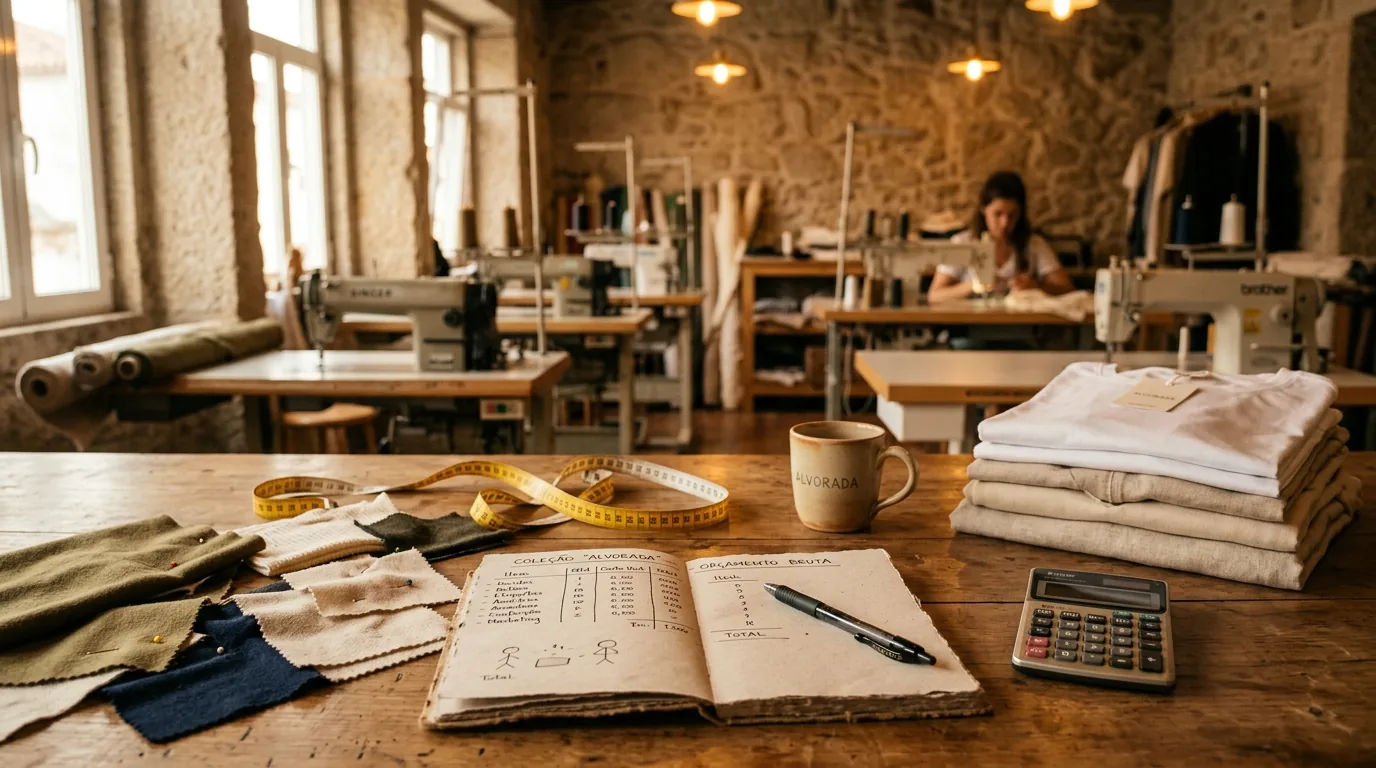
![Low MOQ Clothing Manufacturers in Europe — 50 Units Minimum [2026]](/_next/image?url=%2Fimages%2Fgenerated%2Fblog%2Fclothing-manufacturer-europe-low-moq.webp&w=1920&q=75)
The MOQ Problem
You have a design. You have a brand. You know what you want to produce. And then you contact a factory and hear: "Our minimum order is 500 pieces per colour."
For a startup brand with a modest budget, 500 pieces per colour across 3 styles and 3 colours is 4,500 pieces. At even €12 per unit, that is €54,000 — before marketing, packaging, or photography. For most new brands, this is not realistic.
The search for low MOQ clothing manufacturers in Europe is one of the most common journeys for emerging fashion brands. This guide explains how MOQs work, why they exist, where to find low-MOQ production in Europe, and how to negotiate minimums that work for your brand.
What MOQ Actually Means
MOQ (Minimum Order Quantity) is the smallest number of units a factory will produce in a single production run, per style, per colour, per size run.
That last part — per style, per colour, per size run — is where confusion often arises.
An MOQ of 100 pieces does not mean 100 pieces total. It means 100 pieces of each style-colour combination. So if you want one hoodie in black and grey, your total minimum is 200 pieces (100 black + 100 grey).
However, the way MOQs are structured varies between factories. Some quote per colour, some per style. Always clarify: "Is that 100 pieces per colour, or 100 pieces total across all colours?"
For a comprehensive explanation, read our MOQ guide.
Why MOQs Exist
MOQs are not arbitrary gatekeeping. They exist because of real production economics:
Fabric MOQs
Mills have their own minimums for fabric production. Dyeing a custom colour typically requires 300–500 metres of fabric minimum. Below that, the dye lot is not economical. This translates to roughly 150–250 garments depending on the style.
Setup Costs
Every production run involves setup: pattern grading, marker making, fabric spreading, machine configuration. These costs are fixed regardless of whether you produce 50 or 5,000 pieces. Lower quantities mean higher setup cost per unit.
Cutting Efficiency
Cutting tables can stack 20–50 layers of fabric. More layers = more pieces per cut = less time per unit. At 50 pieces, you might cut 10 layers. At 500, you cut 50 layers. The per-unit cutting cost drops dramatically with volume.
Sewing Line Flow
A sewing line works most efficiently with continuous flow — operators build rhythm and speed when repeating the same operation hundreds of times. Very short runs (under 50 pieces) mean constant setup changes, which reduces productivity.
What "Low MOQ" Means in European Manufacturing
The definition of "low MOQ" depends on context:
| Factory Type | Typical MOQ | What's Considered Low |
|---|---|---|
| Large Asian factory | 500–5,000 | Under 500 |
| Medium European factory | 200–500 | Under 200 |
| Small European factory | 50–200 | Under 100 |
| Micro/artisan workshop | 10–50 | Under 25 |
At White Cotton, our MOQs are:
- —T-shirts and shirts: 100 pieces per colour/fit — or 75 pieces if ordering 2+ colourways
- —Hoodies and sweatshirts: 75 pieces per colour/fit — or 50 pieces if ordering 2+ colourways
- —Other garments: 50–150 pieces depending on complexity
These are among the lowest MOQs available from a properly equipped European factory with in-house production capabilities.
How to Find Low-MOQ Manufacturers in Europe
Portugal
Portugal is arguably the best country in Europe for low-MOQ production. The industry is dominated by small to medium family-run factories (10–50 workers) that are structured for flexibility rather than volume.
Ready to manufacture your collection?
Factory-direct from Barcelos, Portugal. MOQ 50 units per style, colour and size.
Request a QuoteNo commitment · No obligation
- —Typical MOQ range: 50–200 pieces per colour
- —Strengths: Knitwear, premium basics, organic and sustainable production
- —How to find them: Industry directories, trade shows (Modtissimo in Porto), direct outreach to factories in the Barcelos/Guimarães/Braga corridor, or our guide to top clothing manufacturers in Portugal
Italy
Italian factories can work with low MOQs, particularly for luxury and premium production. However, the cost per unit is significantly higher.
- —Typical MOQ range: 100–500 pieces per colour
- —Strengths: Luxury fashion, tailoring, knitwear, leather
- —Cost premium: 30–50% above Portuguese pricing for comparable garments
UK
A small but growing number of UK manufacturers offer low-MOQ production, particularly in the Midlands.
- —Typical MOQ range: 50–200 pieces
- —Strengths: Jersey, casualwear, ethical production
- —Note: Post-Brexit, UK production has customs implications for EU-selling brands
Eastern Europe (Romania, Bulgaria, Poland)
Some Eastern European factories offer low MOQs at competitive prices, though the expertise in premium knitwear is less developed than in Portugal.
- —Typical MOQ range: 100–500 pieces
- —Strengths: Cost-competitive, EU membership (no customs)
- —Limitations: Premium fabric sourcing may be less accessible
How to Make Low-MOQ Production Work
1. Simplify Your Designs
Complex garments cost more to produce in small quantities. Simpler designs (basic crew neck, standard hoodie) are more economical at low volumes than multi-panel, heavily decorated pieces.
2. Use Stock Fabrics
Custom fabric development typically requires 300–500 metres minimum from the mill. Choosing from a factory's existing fabric library eliminates this barrier. At White Cotton, we maintain stock of our 12 core fabrics specifically to enable lower-volume orders.
3. Limit Your Colourways
Every colour requires a separate dye lot. Two colours at 75 pieces each is more efficient (and often cheaper per unit) than four colours at 37 pieces each.
4. Accept Standard Size Runs
A standard size run (S through XL or XXL) is built into the factory's grading system. Custom sizes or non-standard grading rules increase production complexity and cost.
5. Combine Styles on the Same Fabric
If your hoodie and sweatshirt both use 350 GSM French Terry in black, the factory can source one fabric order for both styles. This improves fabric efficiency and may reduce your effective MOQ.
6. Build a Relationship
Factories are more willing to offer flexibility on MOQs to returning clients. Your first order might be at the standard minimum, but after 2–3 successful orders, many factories will accommodate smaller reorders or test batches.
What Low MOQ Costs
Be realistic: low MOQs mean higher per-unit costs. The economics are straightforward.
For a 350 GSM French Terry hoodie with chest embroidery:
| Quantity | Estimated Unit Cost | Notes |
|---|---|---|
| 50 pcs | €24–28 | Highest per-unit cost |
| 75 pcs | €22–26 | Standard low MOQ |
| 100 pcs | €20–24 | Minor efficiency gains |
| 200 pcs | €18–21 | Noticeable cost reduction |
| 500 pcs | €15–18 | Significant savings |
The premium for low-MOQ production is typically 20–40% above what the same garment costs at 500+ pieces. This is a real cost, but for startups testing products, it is the cost of validation — far cheaper than producing 500 pieces of something nobody wants.
For a full cost breakdown, read our production costs guide.
Red Flags When Searching for Low-MOQ Factories
- —No MOQ at all — A factory advertising "no minimum" is either using print-on-demand, outsourcing to another factory, or is too small to maintain quality consistency
- —Very low prices at very low MOQs — If someone offers 50 hoodies at €8 each in Europe, something is wrong. Either the quality, the labour practices, or the fabric is not what they claim
- —No factory address — If you cannot find where the factory is actually located, they may be a middleman adding a margin on top of the actual producer's price
- —Unwillingness to send samples — Any legitimate factory will produce paid samples before production. If they want a full order commitment without a sample, walk away
At White Cotton
We built our operation around flexibility. Our factory in Barcelos is sized for small-to-medium production runs, and our MOQs reflect that:
- —Hoodies and sweatshirts: 75 pieces per colour (50 with 2+ colourways)
- —T-shirts and shirts: 100 pieces per colour (75 with 2+ colourways)
- —Samples: No minimum — single units for approval
We work with brands from their first order through to scaled production. Low MOQ does not mean low quality — every piece receives the same fabric, construction, and quality control regardless of order size.
See our full capabilities as a clothing manufacturer in Portugal, browse our products, or start a conversation. Related guides: clothing manufacturing for startups, how to start a clothing brand, blank clothing manufacturers in Europe.

Pedro Carreira
Founder of White Cotton, a textile manufacturer in Barcelos, Portugal. Producing custom clothing collections for brands across 15+ countries.
Continue Reading
How Much Does It Cost to Start a Clothing Brand in 2026? Real Numbers
![Hoodie Manufacturing Costs: Real Prices from a Portuguese Factory [2026]](/_next/image?url=%2Fimages%2Fgenerated%2Fblog%2Fhoodie-manufacturing-costs-breakdown.webp&w=1920&q=75)
Hoodie Manufacturing Costs: Real Prices from a Portuguese Factory [2026]
![How to Find a Clothing Manufacturer in Portugal: A Factory Owner's Honest Guide [2026]](/_next/image?url=%2Fimages%2Fgenerated%2Fblog%2Fhow-to-find-clothing-manufacturer-portugal.webp&w=1920&q=75)
How to Find a Clothing Manufacturer in Portugal: A Factory Owner's Honest Guide [2026]
![How to Vet a Clothing Manufacturer: The Due Diligence Checklist [2026]](/_next/image?url=%2Fimages%2Fgenerated%2Fblog%2Fhow-to-vet-clothing-manufacturer.webp&w=1920&q=75)
How to Vet a Clothing Manufacturer: The Due Diligence Checklist [2026]
![27 Questions to Ask a Clothing Manufacturer Before Placing Your Order [2026]](/_next/image?url=%2Fimages%2Fgenerated%2Fblog%2Fquestions-to-ask-clothing-manufacturer.webp&w=1920&q=75)
27 Questions to Ask a Clothing Manufacturer Before Placing Your Order [2026]
Start your collection today
Factory-direct from Barcelos, Portugal. MOQ 50 units. Get a free quote.
Request a Quote← Previous
Dropshipping vs Custom Manufacturing: Which Is Right for Your Brand?
Next →
Barcelos Textile Industry — Portugal's Factory Capital [Inside Look]
Ready to start manufacturing?
MOQ 50 pieces · Free quote · Factory-direct from Portugal