Barcelos Textile Industry — Portugal's Factory Capital [Inside Look]
130,000+ textile workers, 400+ factories in one region. Why Barcelos is where brands manufacture clothing in Portugal — from a factory on the ground.
 Pedro Carreira··8 min read
![Barcelos Textile Industry — Portugal's Factory Capital [Inside Look]](/_next/image?url=%2Fimages%2Fgenerated%2Fblog%2Fbarcelos-textile-industry.webp&w=1920&q=75)
A Small City That Dresses the World
Barcelos is a city of approximately 120,000 people in northern Portugal, about 40 minutes north of Porto. If you have never heard of it, you are not alone — it is famous within the textile industry and virtually unknown outside of it.
But if you own a premium hoodie, sweatshirt, or t-shirt from a European brand, there is a reasonable chance it was manufactured here. Barcelos and the surrounding municipalities — Guimarães, Braga, Vila Nova de Famalicão, Santo Tirso — form one of the densest textile manufacturing clusters in Europe.
This is where our factory is. White Cotton has been operating from our facility on Rua Industrial do Corujo in Lijó, Barcelos, since the late 1980s — three generations of our family, cutting and sewing in the same building.
This article is about the place that makes Portuguese textile manufacturing what it is.
The Numbers
The Portuguese textile and clothing industry as a whole:
- —Generates over €8 billion in annual revenue
- —Employs more than 130,000 people
- —Accounts for approximately 10% of Portugal's total exports
- —Includes over 6,000 companies, the vast majority in the northern region
The northern textile corridor — from Porto to Barcelos — concentrates the majority of this activity. Within a 50-kilometre radius, you will find:
- —Garment factories (cut, sew, finish)
- —Knitting mills (producing jersey, fleece, terry, rib)
- —Weaving mills (producing wovens, denim, poplin, twill)
- —Dyeing and finishing houses
- —Embroidery workshops
- —Printing facilities (screen, digital, sublimation)
- —Trim and accessory suppliers (labels, zips, buttons, drawcords)
- —Packaging companies
The entire supply chain — from raw fibre to finished, labelled, packaged garment — can be completed within a one-hour drive. This proximity is not just convenient. It is the reason Portuguese manufacturing can offer lead times that Asian production cannot match.
The History
Textile manufacturing in northern Portugal has roots going back centuries. The region's combination of water (the Cávado, Ave, and Vizela rivers provided power for early mills), mild climate, and agricultural tradition (flax and wool production) made it a natural location for textile production.
The modern industry began to develop in the mid-20th century, initially producing for the domestic market and former Portuguese colonies. After Portugal joined the European Economic Community in 1986, the industry rapidly modernised to compete in European markets.
The 1990s and 2000s brought a wave of consolidation as cheaper Asian production drew away the low-cost, high-volume work. Many factories closed. But the ones that survived — including family operations like ours — adapted by moving upmarket: better fabrics, more sophisticated construction, smaller runs, and direct relationships with brands.
Today, Portuguese textile manufacturing is firmly positioned in the premium segment. The factories that remain are the ones that produce quality worth paying for.
Why Barcelos Works
Everything Is Close
The single biggest advantage of manufacturing in Barcelos is proximity — not to markets (though Porto airport is 40 minutes away), but to the rest of the supply chain.
When we need fabric, our mills are a 20–30 minute drive. When we need labels, our suppliers are in the same industrial zone. When we need dyeing or finishing, the specialists are nearby.
This means:
- —Fabric sourcing in days, not weeks — We can visit a mill, inspect fabric, and have it delivered the same week
- —Problem-solving in person — If a fabric lot has an issue, we drive to the mill. If a label is wrong, we visit the supplier. No emails back and forth across time zones
- —Custom development without delays — New fabric development, custom dye matching, and technical adjustments happen through face-to-face conversations with people we have worked with for decades
Generational Expertise
Many of the people working in Barcelos's textile industry learned their trade from their parents, who learned from theirs. This is not marketing — it is literally how the skills are transmitted.
Ready to manufacture your collection?
Factory-direct from Barcelos, Portugal. MOQ 50 units per style, colour and size.
Request a QuoteNo commitment · No obligation
Our own factory is a three-generation operation. The sewing operators on our floor have years or decades of experience constructing jersey garments. They understand how French Terry behaves differently from brushed fleece, how organic cotton cuts differently from conventional, how 500 GSM fabric needs different machine tension than 200 GSM.
This kind of knowledge cannot be taught in a training programme. It accumulates over years of handling fabric, adjusting machines, and solving problems on the production floor.
Factory Scale
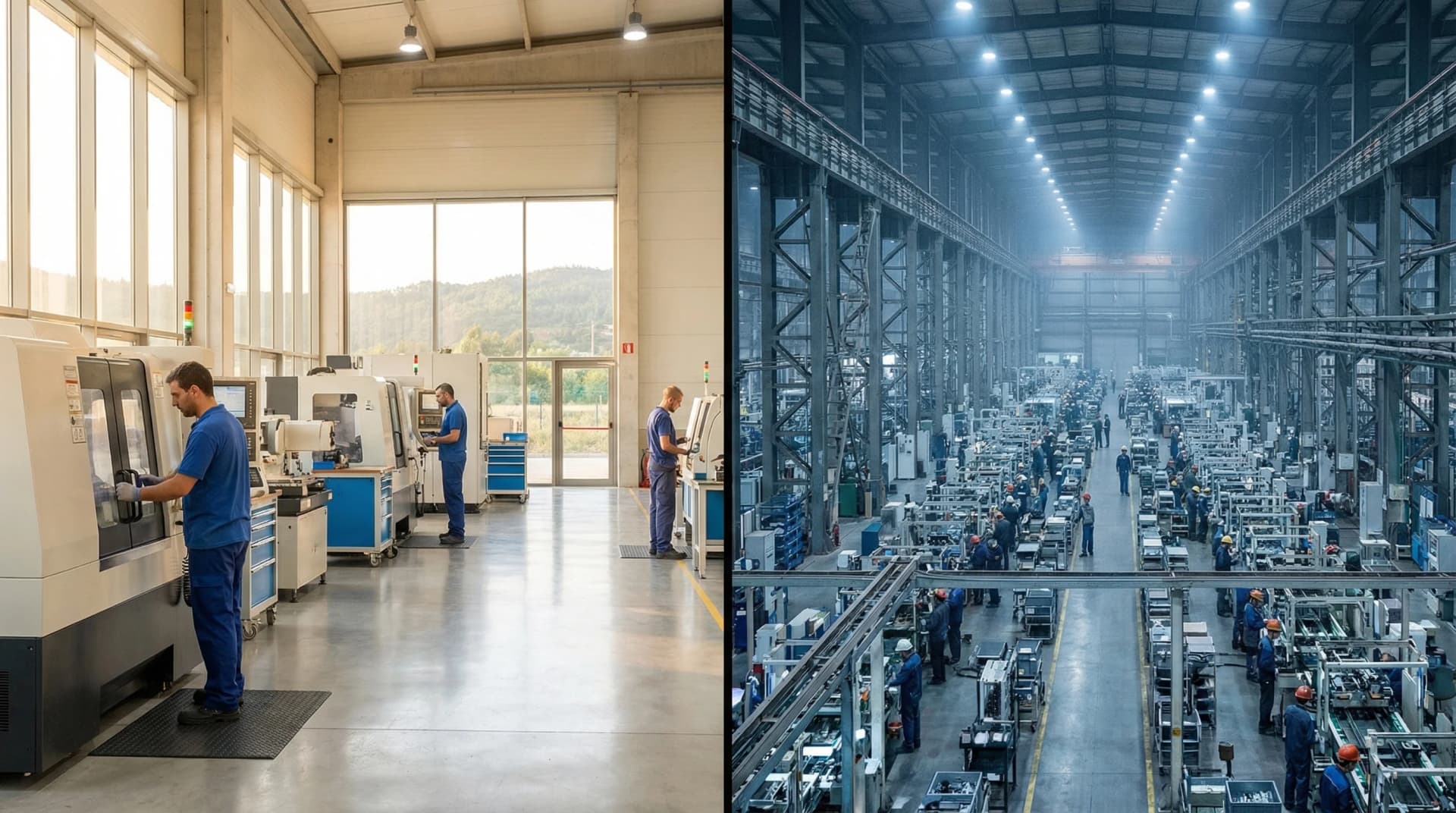
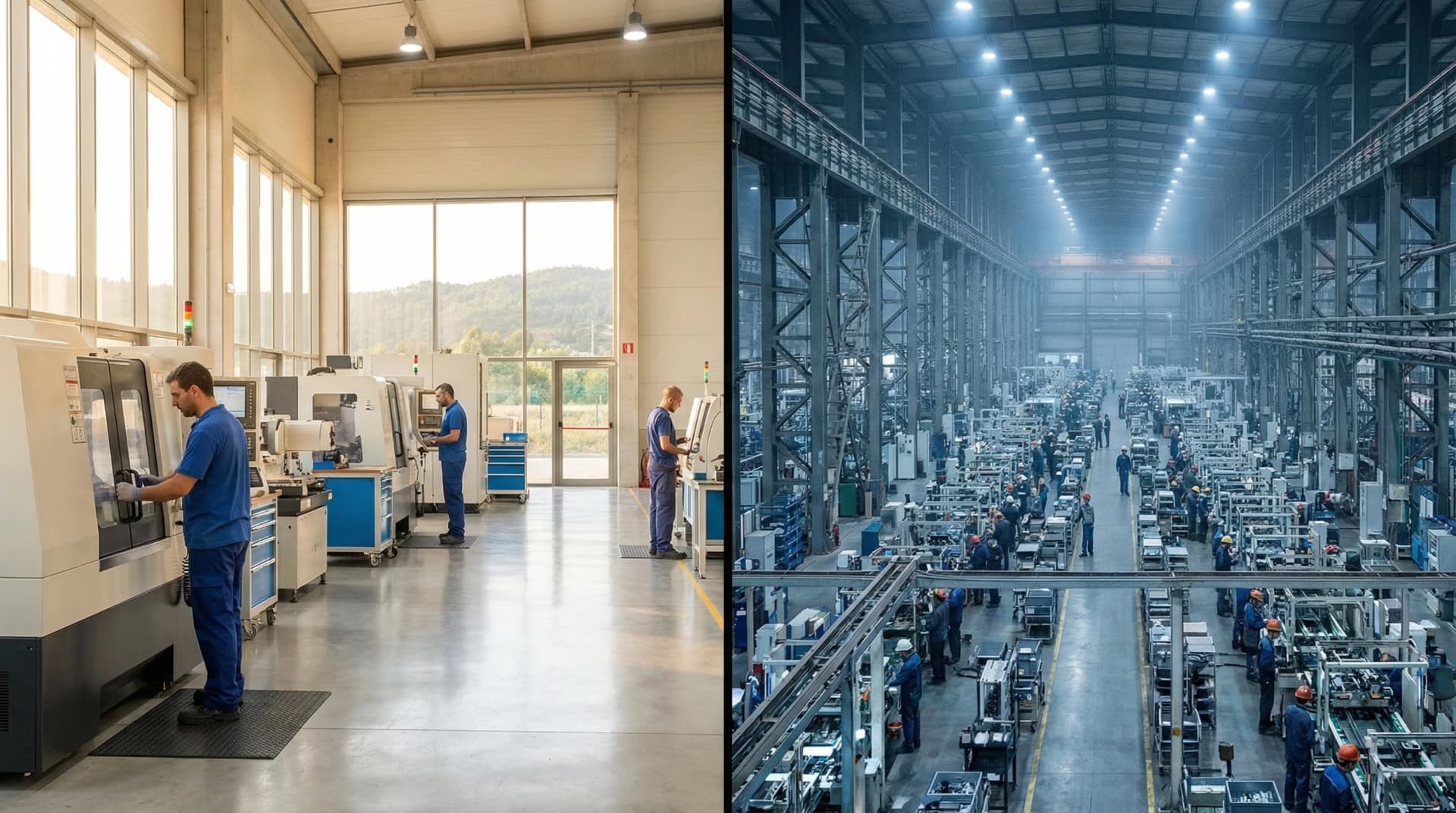
Barcelos's factories are small by global standards. Where a Chinese factory might employ 500–5,000 workers, a typical Barcelos factory has 10–50. White Cotton has approximately 20.
This scale is often seen as a limitation. It is actually an advantage:
- —Flexibility — Small factories can switch between styles quickly, accommodate short runs, and respond to changes without bureaucracy
- —Quality attention — With 20 workers producing hundreds of pieces, individual attention is possible. With 2,000 workers producing tens of thousands, it is not
- —Direct relationships — When a brand works with us, they talk to the people who make their garments. Not an account manager, not a sales team — the factory owner and the production team
- —Accountability — In a small factory, everyone sees the finished product. There is no hiding behind volume or anonymity
Community and Collaboration
The factories in Barcelos are not isolated competitors. They form an ecosystem. Factories specialise — some focus on knitwear, others on wovens, others on denim, others on finishing. When a brand needs something outside our speciality, we can recommend a trusted neighbour.
This collaborative approach means brands working with a Barcelos factory gain access to the broader cluster, not just one operation.
The Typical Barcelos Factory
While every factory is different, there are common characteristics:
Vertically Integrated
Many Barcelos factories, including White Cotton, handle the entire production process in-house — cutting, sewing, finishing, quality control, and packing. This is different from the CMT (cut-make-trim) model common in Eastern Europe and parts of Asia, where the brand or an intermediary manages fabric sourcing and logistics separately.
Vertical integration means the factory controls quality at every stage and can troubleshoot problems immediately.
Family-Owned
The majority of Barcelos's textile factories are family businesses, often in their second or third generation. This ownership structure tends to produce:
- —Long-term thinking (building the business for the next generation, not for quarterly earnings)
- —Personal accountability (the family name is on the line)
- —Relationship-oriented business culture (repeat clients are valued over one-off orders)
Modern Equipment, Traditional Skills
The factories that survived the consolidation of the 2000s invested in modern equipment — automated cutting machines, digital embroidery systems, industrial washing and finishing machines. But the core skill — knowing how to construct a garment properly — remains human.
The best factories in Barcelos combine modern efficiency with artisanal attention. A digitally programmed embroidery machine is operated by someone who has been doing embroidery for 20 years and can spot a tension issue before it becomes a defect.
Visiting Barcelos
If you are considering working with a Portuguese factory, we strongly recommend visiting. Not just to inspect the factory (though that is important), but to understand the environment.
Getting There
- —Fly to Porto (OPO) — Porto's Francisco Sá Carneiro Airport receives direct flights from most major European cities
- —Drive to Barcelos — 40–50 minutes north on the A11/A3 motorway
- —Alternatively — Train from Porto to Barcelos (about 1 hour, Linha do Minho)
What to See
- —The factory floor — watch your garments being cut, sewn, and finished
- —The fabric room — feel the materials, compare weights, see colour options
- —The sample room — review past production and current capabilities
- —The local area — lunch in Barcelos, coffee in Braga, dinner in Porto. The textile corridor is in one of Portugal's most beautiful and historic regions
When to Visit
- —Before placing your first order — Building a relationship in person is worth the flight
- —During production — Seeing your garments being produced builds confidence and catches issues early
- —Seasonally — Many brands visit once or twice a year to plan collections and review production
At White Cotton, factory visits are always welcome. We have nothing to hide — and the brands that visit are always the ones we work with longest. Get in touch to arrange a visit, or explore our products to see what we produce from our Barcelos factory.

Pedro Carreira
Founder of White Cotton, a textile manufacturer in Barcelos, Portugal. Producing custom clothing collections for brands across 15+ countries.
Continue Reading
Top Clothing Manufacturers in Portugal — 15 Ranked (2026)
![Nearshoring Fashion to Europe: Why Brands Are Leaving China for Portugal [2026]](/_next/image?url=%2Fimages%2Fgenerated%2Fblog%2Fnearshoring-fashion-europe.webp&w=1920&q=75)
Nearshoring Fashion to Europe: Why Brands Are Leaving China for Portugal [2026]
Portugal vs China: Why Brands Are Moving Production to Europe
![Made in Portugal Textiles — Why Brands Are Switching [2026]](/_next/image?url=%2Fimages%2Fgenerated%2Fblog%2Fmade-in-portugal-textile.webp&w=1920&q=75)
Made in Portugal Textiles — Why Brands Are Switching [2026]
![How to Find a Clothing Manufacturer in Portugal: A Factory Owner's Honest Guide [2026]](/_next/image?url=%2Fimages%2Fgenerated%2Fblog%2Fhow-to-find-clothing-manufacturer-portugal.webp&w=1920&q=75)
How to Find a Clothing Manufacturer in Portugal: A Factory Owner's Honest Guide [2026]
Start your collection today
Factory-direct from Barcelos, Portugal. MOQ 50 units. Get a free quote.
Request a Quote← Previous
Low MOQ Clothing Manufacturers in Europe — 50 Units Minimum [2026]
Next →
Garment Dyeing vs Piece Dyeing: Pros, Cons & When to Use Each
Ready to start manufacturing?
MOQ 50 pieces · Free quote · Factory-direct from Portugal