Portugal vs China: Why Brands Are Moving Production to Europe
Why clothing brands are shifting from Chinese to Portuguese manufacturing. Cost analysis, quality, lead times, supply chain risks, and the real reasons behind the move.
 Pedro Carreira··7 min read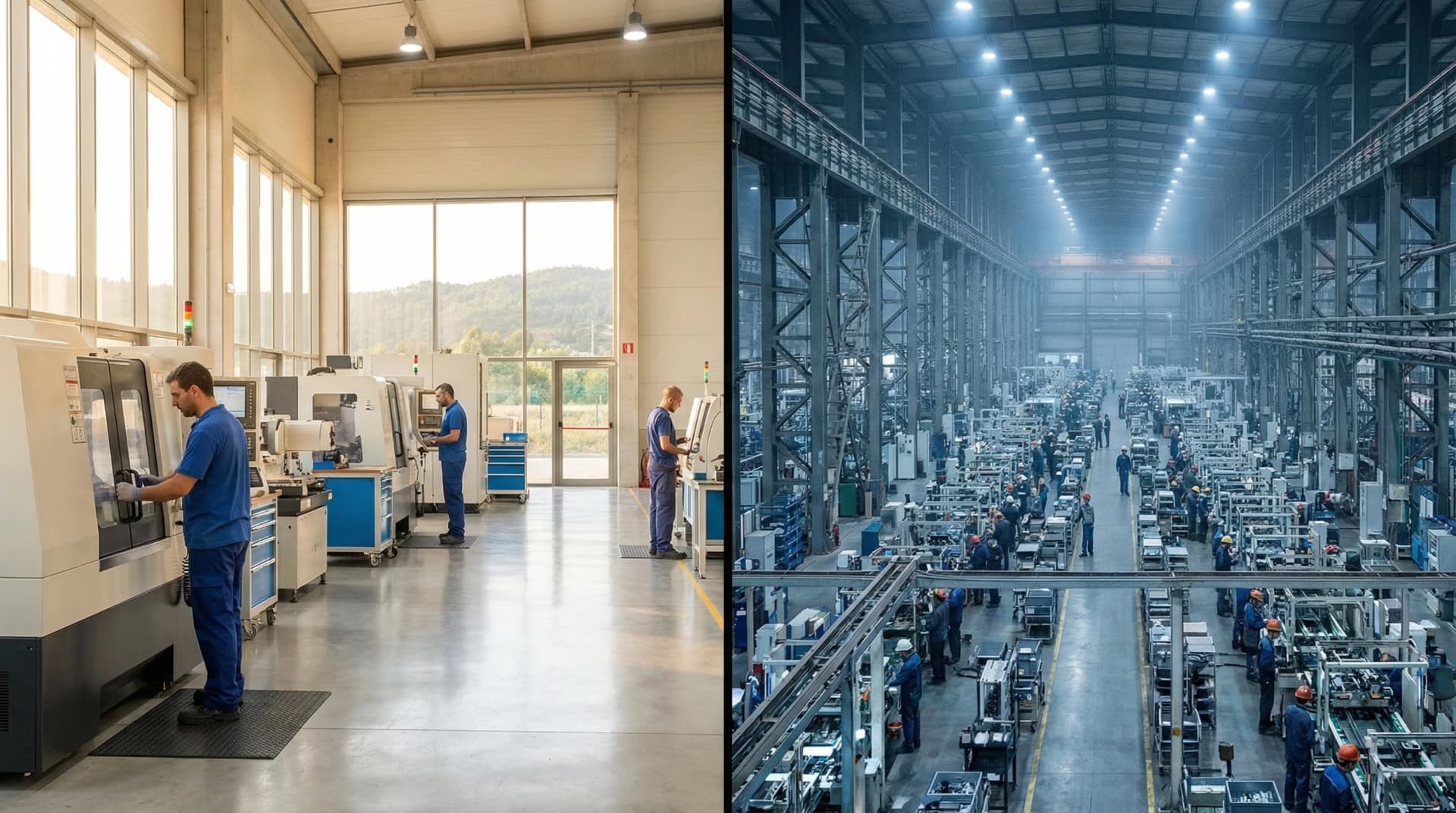
The Shift Is Real
For decades, "manufactured in China" was the default for clothing brands of all sizes. The prices were unbeatable, the capacity was limitless, and the infrastructure was world-class.
That is still true — for certain types of production. But a growing number of brands, particularly European ones, are moving part or all of their production to Portugal. Not because China cannot produce quality garments (it can), but because the equation has changed.
Rising Chinese labour costs, unpredictable shipping timelines, post-pandemic supply chain awareness, increasing consumer demand for transparency, and the growing value of "Made in Europe" — all of these are reshaping where brands choose to produce.
We see this shift firsthand. Many of the brands that contact us were previously producing in China and are looking for an alternative that offers more control, shorter supply chains, and a production story their customers believe in.
The Cost Reality
Let us be direct: Portugal is more expensive per unit than China. That has not changed, and it would be dishonest to pretend otherwise.
Unit Cost Comparison
For a 300 GSM organic French Terry hoodie:
| Cost Factor | China | Portugal |
|---|---|---|
| Fabric per garment | €3–5 | €5–8 |
| Labour per garment | €2–4 | €5–9 |
| Trim and finishing | €1–2 | €1–3 |
| Production cost | €6–11 | €12–22 |
| Shipping to EU | €2–5 (sea freight, per unit) | €0.50–2 (ground) |
| Customs duties | 12% of value | 0% (EU) |
| Landed cost | €9–18 | €13–24 |
The gap narrows when you include shipping, customs, and the hidden costs of long-distance production — but Portugal remains more expensive.
Where Portugal Wins Financially
- —No customs duties within the EU — Chinese imports incur 12% duty on garments
- —Lower shipping costs — Ground freight within Europe vs ocean containers from Asia
- —No air freight emergencies — When Chinese orders miss the shipping window, brands pay €8–15 per unit for air freight. This happens more often than anyone admits
- —Lower minimum orders — Chinese MOQs of 500–1,000+ pieces mean more capital tied up in inventory. Portuguese MOQs of 50–100 reduce inventory risk
- —Fewer returns — Higher quality = fewer customer complaints and returns. A 5% return rate on a €60 hoodie costs €3 per unit sold. Reduce returns to 2% and you save €1.80 per unit
Quality Differences
Chinese Production
China is the world's largest garment producer, and quality spans the entire spectrum — from €2 disposable fast fashion to €200 luxury goods. The challenge is consistency.
- —Large factories operate at enormous scale, which can mean less individual attention per garment
- —Quality varies significantly between factories and even between orders from the same factory
- —Communication barriers and distance make quality issues harder to catch before shipping
- —QC often requires third-party inspection agencies, adding cost and complexity
Portuguese Production
Portugal's textile industry operates at a different scale and with a different philosophy.
- —Smaller factories (10–50 workers is common) provide hands-on quality management
- —Generational expertise in knitwear and jersey means deep knowledge of fabric behaviour
- —EU manufacturing standards ensure baseline compliance with labour and environmental regulations
- —Direct relationships between brands and factory owners eliminate communication layers
At White Cotton, every piece is individually inspected before packing. That level of attention is practical because our production runs are measured in hundreds, not tens of thousands. For a detailed look at quality processes, read our quality control guide.
Ready to manufacture your collection?
Factory-direct from Barcelos, Portugal. MOQ 50 units per style, colour and size.
Request a QuoteNo commitment · No obligation
Lead Times and Agility
This is where Portugal's advantage is most dramatic.
China
- —Sampling: 2–4 weeks (plus 1–2 weeks shipping)
- —Production: 4–8 weeks
- —Shipping (sea): 4–6 weeks
- —Total: 10–18 weeks from sample to delivery
If something goes wrong — a fabric problem, a quality issue, a missed shipment — add another 4–6 weeks. Corrections require another ocean crossing.
Portugal
- —Sampling: 7–10 working days
- —Production: 3–5 weeks
- —Shipping (EU): 2–5 days
- —Total: 5–7 weeks from sample to delivery
If something needs adjustment, a new sample arrives in days, not months. This agility is critical for:
- —Fast-moving brands that need to respond to trends quickly
- —Seasonal collections where timing is everything
- —Reorders — restocking bestsellers in weeks, not months
- —Error correction — fixing problems before they scale
Supply Chain Risk
The pandemic exposed how vulnerable long, globalised supply chains can be. Ports shut down, containers were stranded, shipping costs increased 500–800%, and production timelines became meaningless.
Chinese Supply Chain Risks
- —Port congestion and container shortages (recurring since 2020)
- —Geopolitical uncertainty (trade tensions, tariffs)
- —Single points of failure (one factory, one port, one shipping line)
- —Limited visibility into sub-suppliers and raw material sources
- —Communication challenges across 7–8 time zones
Portuguese Supply Chain
- —Short, transparent supply chain — fabric mills, factories, and logistics within the same region
- —EU trade zone — no tariffs, no customs delays, no geopolitical trade barriers
- —Diversified logistics — road, rail, and air options within Europe
- —Factory visits practical and encouraged — Porto is a 2–3 hour flight from most European capitals
- —Same timezone, same business culture, same regulatory framework
The "Made In" Story
Consumer awareness of where and how their clothes are made has increased dramatically. For many customers, "Made in Portugal" or "Made in Europe" communicates quality, fair labour, and environmental responsibility.
- —"Made in China" carries baggage — fairly or unfairly. Customers associate it with fast fashion, low quality, and poor working conditions. Premium brands increasingly avoid it
- —"Made in Portugal" signals craft, quality, and European manufacturing standards. It is a selling point that justifies premium pricing
This is not about nationalism — it is about brand positioning. If your hoodie retails at €75, "Made in Portugal" supports that price point. "Made in China" undermines it.
For more on this, read why brands choose Portuguese manufacturing.
When China Still Makes Sense
We are honest about this: Chinese manufacturing is the right choice for certain brands and products.
- —Very high volumes (10,000+ pieces per style) where the unit cost advantage is significant
- —Complex technical products (technical outerwear, footwear) where China's advanced manufacturing infrastructure excels
- —Price-sensitive markets where the product retails under €15–20 and margins are volume-dependent
- —Non-European markets where the logistics advantage of European production is less relevant
When Portugal Is the Better Choice
- —Knitwear and jersey products (hoodies, sweatshirts, t-shirts, joggers)
- —Brands selling in European markets
- —Small to medium volumes (50–5,000 pieces per style)
- —Brands that value transparency, direct factory relationships, and quality
- —Premium and mid-premium positioning (retail price €30+)
- —Brands that need fast reorder cycles
- —Brands that want verifiable sustainability credentials
Making the Move
If you are currently producing in China and considering a shift to Portugal, here is a practical approach:
- 1.Start with one style — Move your bestseller to Portuguese production. Compare quality, lead times, and customer response
- 2.Send us your Chinese-made sample — We will evaluate it and tell you honestly whether we can match or improve the quality, and at what cost
- 3.Budget for higher unit costs, better margins — The per-unit cost will be higher, but the retail price can increase to reflect "Made in Portugal" positioning
- 4.Plan the transition gradually — Most brands do not move everything at once. Start with your premium line and scale from there
At White Cotton, we regularly work with brands making this transition. Our factory in Barcelos produces everything in-house — send us your current product and we will provide a detailed comparison quote within 48 hours. Related: choosing a manufacturing country, Portugal vs Turkey manufacturing, sustainable fashion supply chain.

Pedro Carreira
Founder of White Cotton, a textile manufacturer in Barcelos, Portugal. Producing custom clothing collections for brands across 15+ countries.
Continue Reading
Top Clothing Manufacturers in Portugal — 15 Ranked (2026)
![Barcelos Textile Industry — Portugal's Factory Capital [Inside Look]](/_next/image?url=%2Fimages%2Fgenerated%2Fblog%2Fbarcelos-textile-industry.webp&w=1920&q=75)
Barcelos Textile Industry — Portugal's Factory Capital [Inside Look]
![Nearshoring Fashion to Europe: Why Brands Are Leaving China for Portugal [2026]](/_next/image?url=%2Fimages%2Fgenerated%2Fblog%2Fnearshoring-fashion-europe.webp&w=1920&q=75)
Nearshoring Fashion to Europe: Why Brands Are Leaving China for Portugal [2026]
![Made in Portugal Textiles — Why Brands Are Switching [2026]](/_next/image?url=%2Fimages%2Fgenerated%2Fblog%2Fmade-in-portugal-textile.webp&w=1920&q=75)
Made in Portugal Textiles — Why Brands Are Switching [2026]
![How to Find a Clothing Manufacturer in Portugal: A Factory Owner's Honest Guide [2026]](/_next/image?url=%2Fimages%2Fgenerated%2Fblog%2Fhow-to-find-clothing-manufacturer-portugal.webp&w=1920&q=75)
How to Find a Clothing Manufacturer in Portugal: A Factory Owner's Honest Guide [2026]
Start your collection today
Factory-direct from Barcelos, Portugal. MOQ 50 units. Get a free quote.
Request a Quote← Previous
Clothing Brand Business Plan: The Manufacturer's Perspective
Next →
Scaling Your Clothing Brand: When to Move from Small Batch to Bulk
Ready to start manufacturing?
MOQ 50 pieces · Free quote · Factory-direct from Portugal