For Sustainable Fashion Brands
Sustainable Manufacturing, No Compromise
Certified organic cotton, recycled fibres, transparent production — manufactured in Portugal with full traceability.
Trusted by brands from UK, Germany, France, Netherlands, Dubai & 15+ countries
What We Offer
White Cotton is a sustainable garment manufacturer producing for eco-conscious fashion brands across Europe. Our Barcelos facility uses OEKO-TEX Standard 100 certified fabrics and works with GOTS-certified organic cotton, BCI cotton, and recycled fibres. We offer full traceability from fibre to finished garment through a short, auditable European supply chain.
Why Sustainable Fashion Brands Choose Portuguese Manufacturing
Sustainability in fashion has moved beyond marketing language. The brands succeeding in 2026 treat sustainability as an operational discipline, not a tagline — and that starts with choosing the right manufacturing partner. The question is no longer whether your garments are sustainable, but whether you can prove it at every level of the supply chain. Certifications, traceability documentation, and auditable processes are what separate credible sustainability claims from greenwashing. This is where the distinction between factory certifications and fabric certifications matters. White Cotton sources GOTS-certified organic cotton and OEKO-TEX Standard 100 certified fabrics from accredited European mills. The certifications follow the materials, not the factory floor — meaning the organic cotton in your garment is verified organic from field to finished fabric, regardless of which sewing facility assembles it. We are transparent about this because your customers and regulators will eventually ask, and honest answers build more trust than vague claims.
The certification landscape in sustainable textiles can be confusing, so it is worth clarifying what each standard actually certifies. GOTS (Global Organic Textile Standard) certifies that organic fibres are processed according to strict environmental and social criteria from raw material through to manufacturing and labelling — it applies to the textile supply chain, and brands use it to guarantee the fabric content. OEKO-TEX Standard 100 tests finished textiles for harmful substances, ensuring the product touching skin is chemically safe. GRS (Global Recycled Standard) verifies recycled content in products and tracks it through the supply chain. BCI (Better Cotton Initiative) is a sourcing standard for more sustainably grown cotton. When we say we source GOTS-certified organic cotton, we mean the cotton itself carries the certification from the mill — your swing tags can reference the material certification, and we provide the documentation to back it up. This is the honest approach, and it is the one that holds up under scrutiny.
The EU Digital Product Passport is not a future concept — it is coming into force, and smart brands are preparing now. Under the EU Strategy for Sustainable and Circular Textiles, garments sold in the EU will need digital product passports containing information on material composition, supply chain origin, repairability, and environmental impact. Brands manufacturing in Europe with documented supply chains have a structural head start. Our production records already capture fabric origin, composition, processing steps, and traceability data that will form the core of these passports. Brands manufacturing in Asia with multi-layered subcontracting networks face a significantly harder compliance path. Choosing a Portuguese manufacturer now is not just a sustainability decision — it is a regulatory preparedness decision that saves you a painful scramble when DPP requirements become mandatory.
Supply chain transparency is increasingly a competitive advantage, not just a compliance requirement. Consumers — particularly in the 25–40 age bracket that drives sustainable fashion purchases — want to know where their clothes come from. Brands that can point to a specific factory in Barcelos, Portugal, show the faces of the people who made the garment, and trace the cotton back to a specific region build a connection that no Amazon private-label competitor can replicate. Our short European supply chain makes this transparency practical. Fabric is milled in Portugal or elsewhere in the EU, garments are cut and sewn in our Barcelos facility, and the finished product ships within Europe. There are no anonymous subcontractors, no hidden factory layers, and no ocean freight containers disappearing into port backlogs. You can visit the factory once your production is underway, meet the team, and photograph the process for your brand story.
The cost of organic is real, and pretending otherwise would be dishonest. Organic cotton fabrics carry a 15–30% premium over conventional cotton, depending on the weight and weave. A 180 GSM organic cotton jersey tee might cost EUR 1.50–2.00 more per unit in fabric cost than its conventional equivalent. At the finished garment level, factoring in certified trims, documentation, and traceability overheads, the premium on an organic garment is typically 10–20% over conventional production. For a tee that costs EUR 8 to produce conventionally, the organic version comes in at EUR 9–10. That premium is real — but so is the pricing power it unlocks. Consumers consistently pay 20–40% more for verified organic and sustainable products, meaning the margin on organic garments is often higher in absolute terms than on conventional ones. The economics work, but only if your supply chain documentation is credible enough to justify the price. That is where manufacturing with a transparent European partner pays for itself.
Why Choose Us
Why White Cotton for Sustainable Fashion Brands
Certified Fabrics as Standard
We source OEKO-TEX Standard 100 certified fabrics, GOTS-certified organic cotton, and BCI-accredited fibres. Every fabric lot comes with verifiable transaction certificates for your marketing and compliance needs.
Organic & Recycled Materials
Our fabric library includes organic cotton jersey, recycled polyester jersey, organic French terry, and organic brushed fleece. All available from stock or custom-developed to your specifications.
Short European Supply Chain
Raw materials sourced from Portugal and the EU. Garments manufactured in Barcelos. Shipping to any European destination in 3–5 days. Your carbon footprint is a fraction of Asian-sourced production.
Full Traceability
We provide documentation tracing every garment from fibre origin through spinning, knitting, dyeing, cutting, and sewing. This transparency supports your sustainability claims and regulatory compliance.
Water-Based Printing & Low-Impact Processes
Our DTG printing uses water-based OEKO-TEX certified inks. Embroidery requires no chemicals at all. We prioritize low-waste cutting with CAD nesting and recycle all textile offcuts.
MOQ from 50 Units
Sustainable manufacturing without bulk commitments. Start with 50 units per style — ideal for brands avoiding overproduction, a core principle of sustainable fashion.
Product Catalog
Popular Products

Seamless Crewneck
400GSM — 100% Organic Brushed Cotton
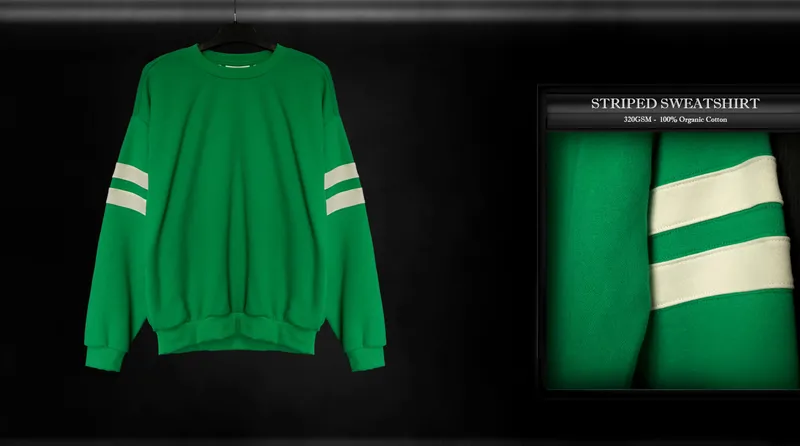
Striped Sweatshirt
320GSM — 100% Organic Cotton
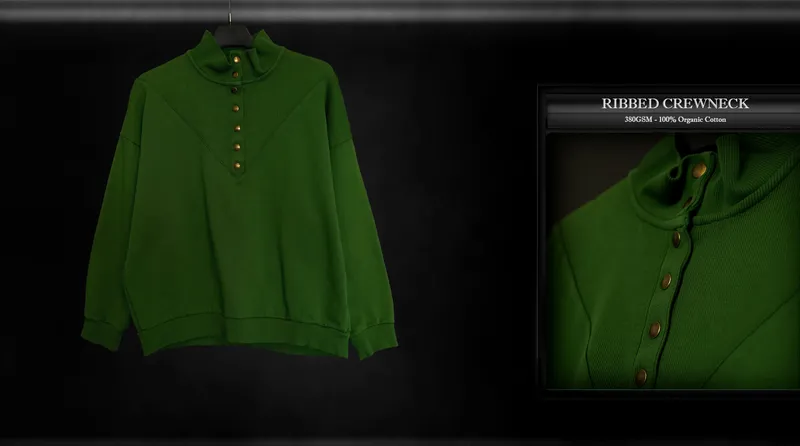
Ribbed Crewneck
380GSM — 100% Organic Cotton
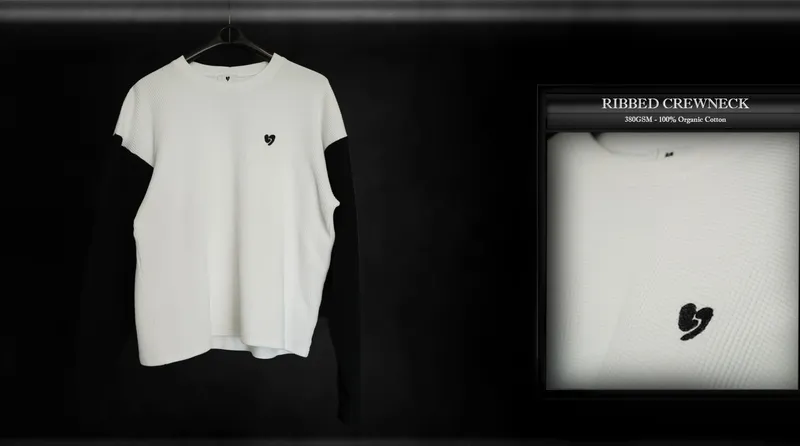
Ribbed Crewneck II
380GSM — 100% Organic Cotton
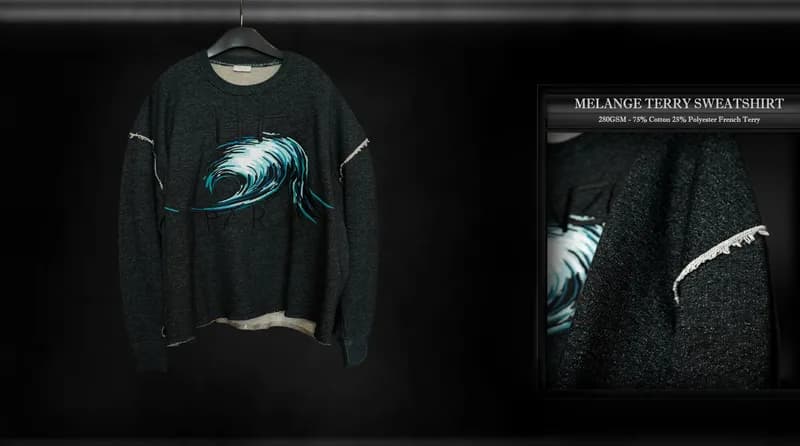
Melange Terry Sweatshirt
280GSM — 75% Cotton 25% Polyester French Terry
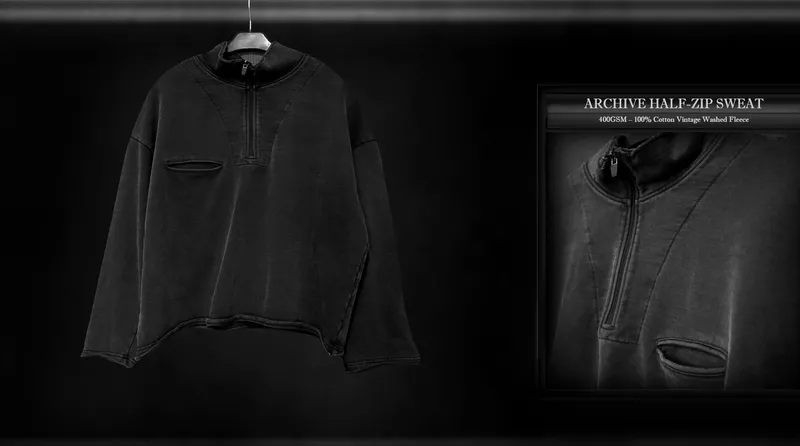
Archive Half-Zip Sweat
400GSM — 100% Cotton Vintage Washed Fleece
Fabric Selection
Recommended Fabrics
Organic Cotton Jersey
GOTS-certified, available from 140–300 GSM. The foundation of any sustainable basics line — t-shirts, longsleeves, and everyday essentials.
Recycled Jersey
Made from post-consumer recycled polyester and organic cotton blends. Diverts plastic from landfill while delivering performance and comfort.
Linen
Naturally low-impact fibre requiring minimal water and no pesticides. Biodegradable, breathable, and increasingly demanded by conscious consumers.
Decoration & Finishing
Recommended Techniques
DTG Printing
Water-based, OEKO-TEX certified inks applied directly to garment. Zero waste ink, no screens to dispose of, and vibrant results on organic cotton.
Embroidery
Zero chemicals, zero inks, zero waste. Thread is stitched directly into fabric — the most sustainable decoration method available. Lasts the lifetime of the garment.
Specialty Finishes
Enzyme washes and bio-based softeners that enhance hand-feel without harsh chemicals. We can develop finishes that meet your sustainability standards.
Real Example
How We Delivered
Scenario
A Copenhagen-based B-Corp certified brand needed 500 organic cotton t-shirts in 4 colourways with water-based DTG printing, full fibre-to-garment traceability documentation, and compostable poly-bag packaging.
Solution
We sourced GOTS-certified organic cotton jersey at 180 GSM, printed with OEKO-TEX certified water-based inks via DTG, provided complete chain-of-custody documentation, and packed in certified compostable bags.
Result
Delivered in 4 weeks. The brand used our traceability docs in their product pages, increasing customer trust. They now produce 4 seasonal collections per year with us.
Process
How It Works
Send Your Tech Pack
Share your tech pack with flat sketches, measurements, and fabric specs. Still developing it? Send what you have — we'll help you refine it.
Get a Detailed Quote
Receive a detailed, transparent quotation covering fabric, trims, manufacturing, and finishing. Factory-direct pricing, no middlemen.
Approve Your Sample
We produce a pre-production sample for your review. Iterate until every detail — fit, fabric, colour, construction — matches your vision.
Production & Delivery
Full production with quality control at every stage. Packed to your specs and shipped directly to your warehouse or fulfillment centre.
Common Questions
Frequently Asked
What sustainability certifications does White Cotton hold?
We source OEKO-TEX Standard 100 certified fabrics, GOTS-certified organic cotton from certified mills (with transaction certificates), and cotton from BCI-member mills. We provide fabric certification documentation on request for your compliance and marketing use. We do not hold factory-level certifications — the certifications apply to the fabrics and mills we source from.
What is the minimum order for organic cotton garments?
50 units per style per colourway, same as all our products. We believe sustainable manufacturing should be accessible to small brands, not just those ordering thousands of units.
How do you reduce the carbon footprint of production?
We source materials from Portugal and the EU, manufacture in Barcelos, use low-waste CAD cutting, recycle textile offcuts, and ship within Europe — eliminating the intercontinental freight emissions of Asian production.
Can you provide traceability documentation?
Yes. We trace every garment from fibre source through spinning, knitting, dyeing, cutting, and sewing. This documentation supports EU regulatory compliance and your brand's transparency claims.
Do you use water-based or eco-friendly inks?
Our DTG printing uses OEKO-TEX certified water-based inks. Screen printing is available in both water-based and plastisol options. We recommend water-based for brands prioritizing sustainability.
What recycled materials do you offer?
We offer recycled polyester/cotton blended jersey, made from post-consumer recycled PET bottles. Custom recycled fabric blends can be developed for orders over 300 units.
Ready to manufacture for sustainable fashion brands?
Free Tools
Also Manufacturing For