Specialty
Specialty Finishes & Effects
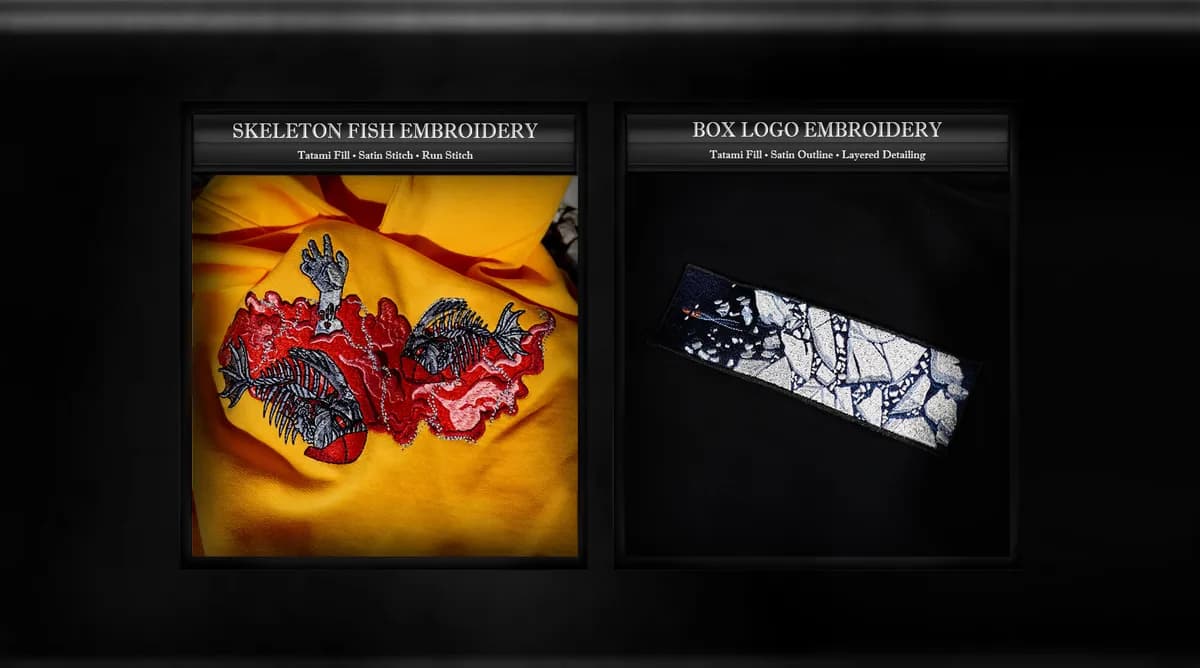
Specialty finishes encompass advanced decoration techniques beyond standard printing and embroidery — including laser cutting, woven patches, rubber prints, reflective ink, and distressing or vintage washes. At White Cotton, these finishes transform garments from basic to premium, adding the tactile details and unique textures that define high-end streetwear and designer collections.
From Our Factory
How It Works
Design consultation: we review the brand's creative direction and recommend which combination of finishes will achieve the desired look and feel.
Sampling: specialty finishes are highly variable, so we produce physical samples (typically 2–3 rounds) before committing to production — this is essential for techniques like distressing where results can vary.
Production setup: laser files are programmed, wash recipes are calibrated, patch artwork is woven, rubber moulds are created — each technique has its own tooling.
Application: finishes are applied in the correct sequence — typically construction first, then decoration, then washing/distressing last (as washes affect all prior work).
Quality control: every piece is inspected individually, as specialty finishes have higher variation tolerance than standard decoration — we agree on acceptable variation ranges with the brand before production.
Best For
Pros & Cons
Pros
- +Unique, premium aesthetic that mass-market competitors cannot replicate easily
- +Tactile quality that photographs well and drives social media engagement
- +Combinable — multiple finishes on a single garment create a layered, luxurious feel
- +Strong brand differentiation — customers pay more for garments with visible craft
- +Many finishes (patches, rubber prints) can be added to existing blanks for quick launches
Cons
- −Higher per-unit cost — each finish adds a production step and often requires tooling
- −Longer lead times — sampling specialty finishes takes 2–4 weeks before production
- −Some finishes (distressing, vintage wash) have inherent variation between units
- −MOQs for certain finishes (woven patches, rubber moulds) may be higher due to tooling costs
- −Not all finishes are compatible — some combinations require specific production sequencing
Common Questions
Frequently Asked
What specialty finishes does White Cotton offer?
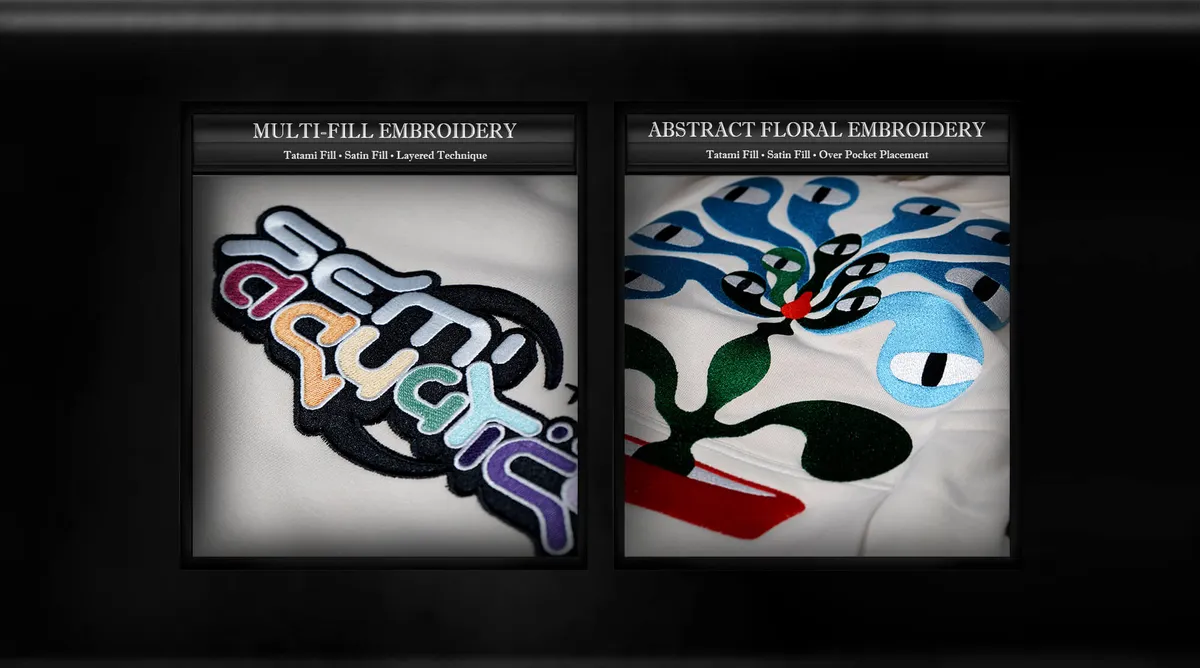
We offer laser cutting (perforation, ventilation, decorative patterns), woven and embroidered patches, rubber (silicone) screen printing, reflective ink, garment distressing (enzyme wash, acid wash, stone wash, sand wash), vintage dyeing, and raw-edge finishing. These can be combined with standard embroidery, screen printing, and DTF to create multi-layered premium garments.
What is rubber printing?
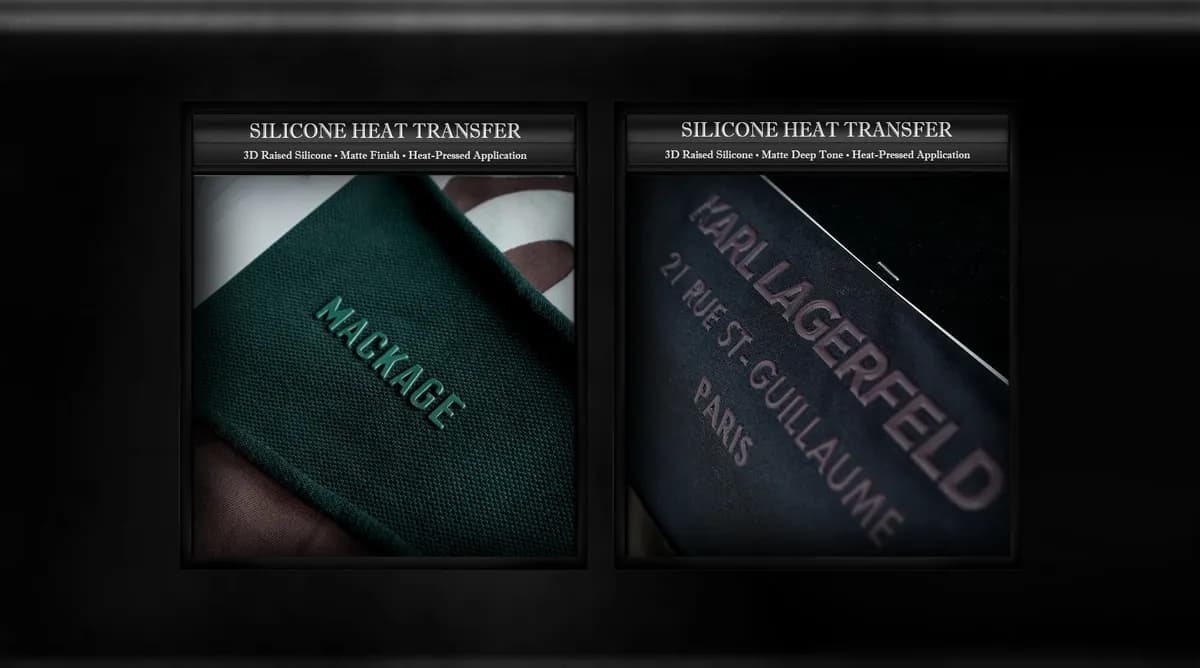
Rubber (silicone) printing uses a thick silicone-based ink applied through a screen printing process to create a raised, rubbery, 3D logo or design on the garment surface. It is extremely durable, waterproof, and gives a bold tactile effect. Popular for streetwear logos, outerwear branding, and sportswear where a premium, industrial aesthetic is desired.
How does garment distressing work?
Garment distressing involves treating finished garments with industrial washing processes to achieve a worn-in, vintage appearance. Enzyme wash uses biological enzymes to soften and lightly fade the fabric. Acid wash creates a mottled, high-contrast pattern. Stone wash tumbles garments with pumice stones for a heavily worn effect. Each wash can be calibrated from subtle softening to aggressive distressing.
Can I combine multiple specialty finishes on one garment?
Yes — and this is where the magic happens. A typical premium streetwear hoodie might combine embroidered chest logo, rubber-printed back graphic, woven label, and vintage enzyme wash. The key is production sequencing: decoration is applied before washing (as the wash affects everything), and heat-sensitive elements (DTF, vinyl) must be applied after washing. We plan the production sequence during sampling.
What are the MOQs for specialty finishes?
MOQs vary by finish type. Woven patches: 100 units minimum (due to loom setup). Rubber moulds: 50 units (one-time mould cost, reusable). Laser cutting: 25 units (no tooling). Garment distressing/washing: 50 units per wash recipe (industrial washers need minimum load). Reflective ink: 50 units (screen setup). We recommend starting with samples before committing to production MOQs.
Related Reading
Interested in Specialty Finishes & Effects?
Explore More